Sweet and Salty Bacon Jam

Wow, what a week. I just came back from an awesome trip to the Bay Area where I relaxed with my family and caught up with old friends. During my trip, an extra awesome thing happened: my homemade beef jerky post was featured on Freshly Pressed. My lowly little blog making it onto the front page of WordPress was an unexpected, but welcome surprise! Thank you sincerely to everyone who sent me feedback.

And now….back to reality!

I decided to try my hand at bacon jam a couple weeks ago because I was craving a sweet and salty sensation. Bacon jam has been popular for quite some time now, thanks to our local Skillet who sells it by the jar. To my pleasant surprise, it is also very easy to make at home. It does require a couple hours of cook time, but the trade off is that you have more control over the balance of flavors. Totally worth it in my book. Be forewarned that a full batch of this recipe completely filled one of my three cup mason jars. But who can ever have too much bacon jam?

This condiment adds an extra special touch to eggs, grilled cheese sandwiches, burgers, baked potatoes, cheese and crackers, and more. A little bit goes a long way, so when eaten in moderation it’s not completely unhealthy. Right!?

It’s a bit unfortunate that this bacon jam post came on the heels of my old beef jerky post being featured, because now I look like some carnivorous freak. I swear it’s just a coincidence! More fruit and veggie posts coming soon, I promise.

Bacon Jam
Recipe adapted from Martha Stewart using The Perfect Pantry method

Yield: About 3 cups

  • 1 -1/2 pounds sliced bacon, cut crosswise into 1-inch pieces
  • 2 medium yellow onions, diced small
  • 3 garlic cloves, smashed and peeled
  • 1/2 cup cider vinegar
  • 1/2 cup packed dark-brown sugar
  • 1/4 cup pure maple syrup
  • 3/4 cup brewed coffee
  • Cayenne pepper to taste
  • Salt to taste
  1. Cook bacon in a large cast iron pot over medium heat, stirring occasionally, until fat is rendered and bacon is lightly browned (approximately 20 minutes, depending on the thickness of the bacon). With a slotted spoon, remove the bacon and place on a platter lined with paper towels.
  2. Pour off all but 1 tablespoon of bacon fat. (Save the fat for another delicious use). Add the onions and garlic, and cook until onions are translucent. Add 1/2 cup vinegar, 1/2 cup brown sugar, 1/4 cup maple syrup, and 3/4 cup coffee, and bring to a boil, stirring and scraping up the bacon bits from the bottom of the pan. After 2 minutes, add the bacon, and stir to combine.
  3. Reduce heat to simmer, and cook, uncovered, for 2 hours, stirring occasionally to make sure nothing is burning. If the jam seems to be cooking too fast, add 1/4 cup of water every now and then.
  4. Toward the end of the 2 hours, taste the jam and see what flavors you need to add. This recipe is about finding the right balance–and it just comes down to personal preference. I added some salt to balance out the sweetness, and some cayenne pepper give the jam a nice spicy kick.
  5. When the liquid is syrupy, remove the pot from the heat. Let it sit for 5 minutes, then transfer contents to a food processor and pulse 3 or 4 times until coarsely chopped. Transfer to a heat-resistant bowl. Let the jam cool, then refrigerate in an airtight container for up to a month.

Start by rendering the bacon, and draining off all but one tablespoon of grease. Save the remaining grease in an airtight container in the fridge for another use.

Saute the onions and garlic to bring out their delicious flavors.

Add the remaining ingredients, grab a good book, and wait for the magic to happen.

Bacon mixture after an hour of cooking. Stir periodically to make sure it’s not cooking too quickly and burning.

Toward the end of the two hours, do a taste test and see if you want to add any salt or cayenne pepper. If you’ve never worked with cayenne before, be very careful–a little goes a long way. When the mixture takes on an almost syrupy consistency, you’ll know it’s ready to hit the food processor.

Use your bacon jam on absolutely anything. My boyfriend Jeff was a huge fan of my grilled cheese with arugula and bacon jam. It’s also delicious simply spread on a piece of toast with a poached egg on top.

What would do you do with your bacon jam? Do you have any creative ideas for the leftover bacon grease?
Leek, Potato, and Zucchini Pancakes

I am a self-confessed veggie nerd. Growing up, my mom never had a problem getting me to eat everything from broccoli to eggplant. I wasn’t a picky child at all. In fact, pretty much the only thing I wouldn’t eat was a McDonald’s hamburger. Now I know why. Good call, five year old me. You would think that would make me a dream child, right? Then, enter my teenage girl years, during which there was enough door slamming, name calling, and eye rolling to far offset any previous form of good behavior. (Sorry, Mom!)

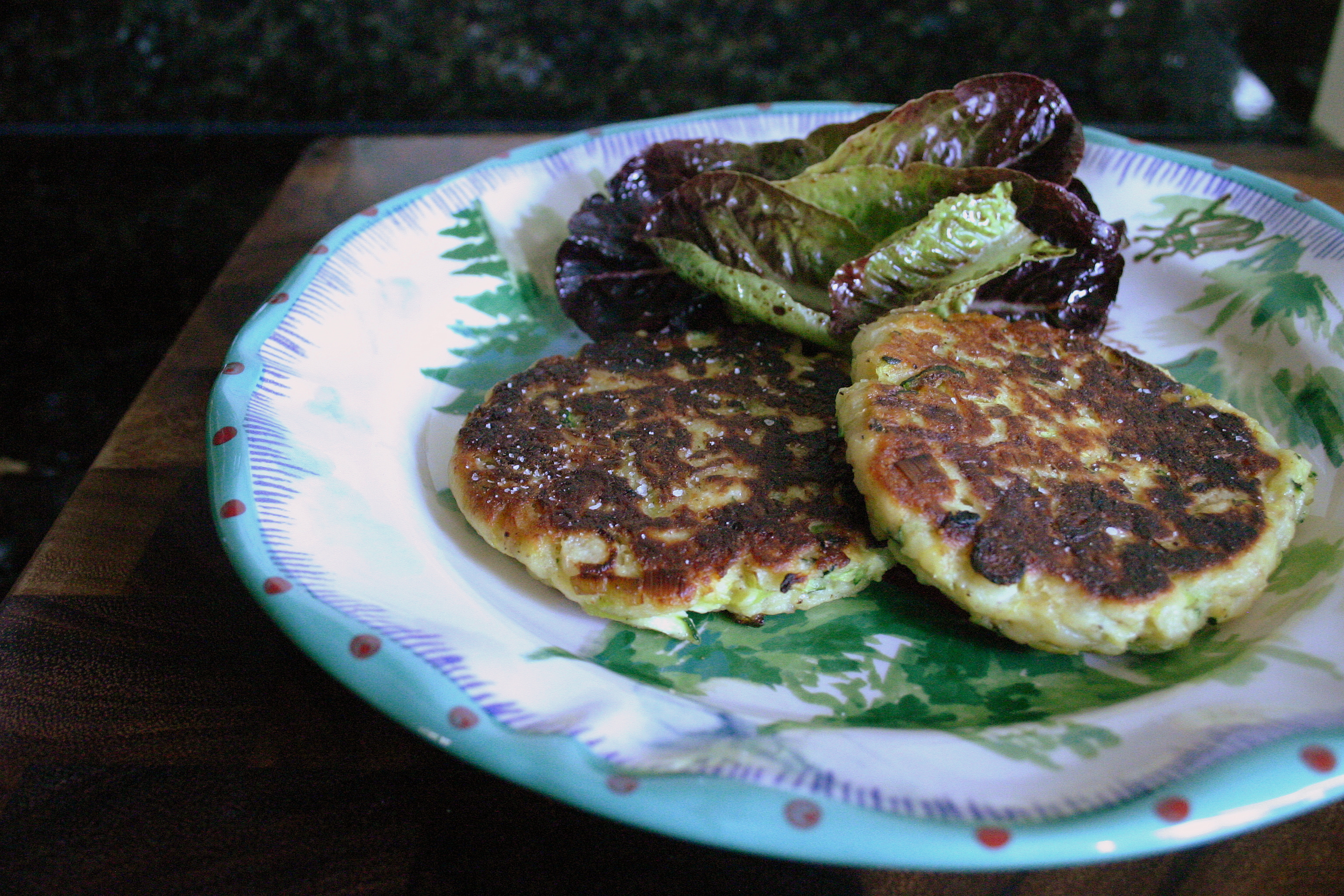
Luckily, I grew out of that phase, but still love my veggies. Unsurprisingly, I get really excited to break open my produce boxes during this time of the year. The other week, I received some beautiful leeks and racked my brain trying to figure out what recipe would do them justice. I finally decided on a recipe for leek, potato, and zucchini pancakes from NYT–the perfect springtime meal. My changes include a pinch of cayenne pepper, creme fraiche or sour cream for serving, and nuking the potato in the microwave instead of baking them in the oven to cut down on time.

As it turns out, leeks are all the rage this week! Check out Smitten Kitchen’s leek toasts with blue cheese and NYT’s green garlic, potato, and leek soup.

Leek, Potato, and Zucchini Pancakes 
Adapted from New York Times

Yield: 2 servings

  • 1 medium russet potato (8 ounces)
  • Salt and pepper
  • 3 whole leeks, white and light green parts, sliced crosswise into 1/8-inch-wide pieces (to make about 4 cups), and thoroughly rinsed
  • 1 cup grated zucchini
  • 1 large egg, beaten
  • 1/4 cup all-purpose flour
  • 1/3 cup grated Parmesan cheese
  • 2 tablespoons chopped fresh parsley leaves
  • 2 tablespoons canola or olive oil
  • Pinch of cayenne pepper (optional)
  • Creme fraiche or sour cream for serving (optional)
  1. Pierce potato with fork a couple of times, place on microwave safe plate, and microwave for 4-5 minutes until tender. Set aside to cool.
  2. Place zucchini in a bowl and sprinkle lightly with salt. Let sit for 10 minutes. (You can move on to the next step while you are waiting) Place the zucchini in a dishtowel or cheesecloth and twist firmly and repeatedly to remove excess moisture. Set aside.
  3. Bring a large pot of salted water to boil. Add leeks and cook until tender, 4 to 5 minutes. Strain. Place the leeks in a dishtowel or cheesecloth and twist firmly and repeatedly to remove excess moisture. Set aside.
  4. Peel potato, discarding the skin, and shred on the large holes of a box grater.
  5. In a medium bowl, combine the potato, leeks, zucchini, 1 egg, 1/4 cup flour, pinch of cayenne pepper, 1/3 cup cheese and 2 tablespoons parsley. Season to taste with salt and pepper. Mix well. In a large skillet over medium heat, add 2 tablespoons oil and heat until shimmering. Measure 1/4 cup of the leek and potato mixture and form into a patty about 2/3 of an inch thick. Repeat with the remainder of the mixture.
  6. Working in batches, if necessary, fry the cakes, flattening them with a spatula, until they are golden brown on each side, 4 to 5 minutes a side. Set aside and keep warm. Serve with creme fraiche or sour cream.
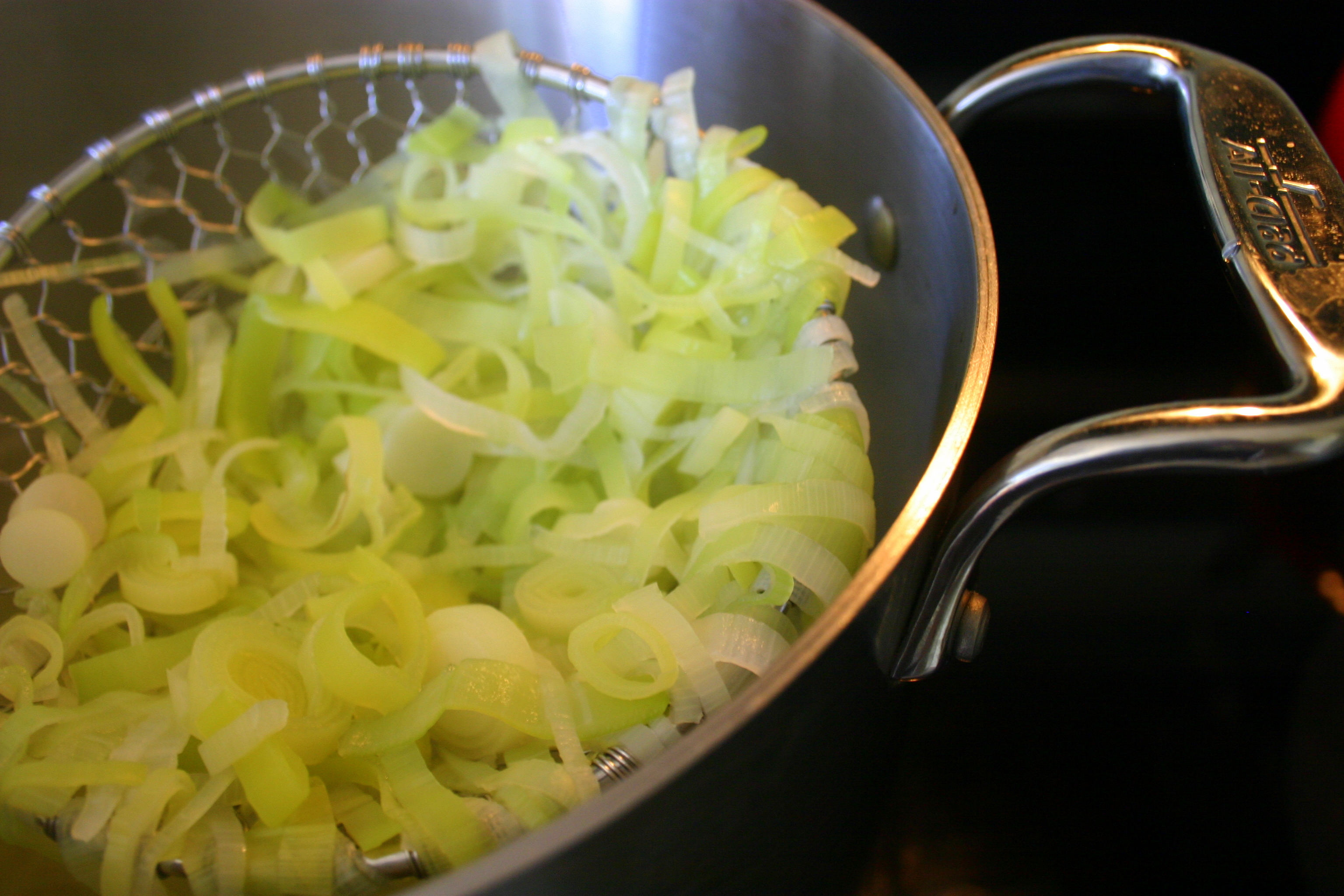
Slice the leeks into thin slices about 1/8″ thick. To clean, fill a big bowl with water and submerge all the sliced leeks. Lift the leeks out of the bowl with your hands and place in a separate clean bowl. All the dirt and nasty bits should fall to the bottom of the water bowl. Rinse the water bowl; fill with more water; and repeat until leeks are clean.
Lightly salting the grated zuc will force the excess moisture out of it, thus preventing soggy pancakes. Yay!
Blanching the leeks before they go into the pancakes will help bring out their flavor.
Using your hands, mold your mixture into approximately 1/4 cup patties of deliciousness.
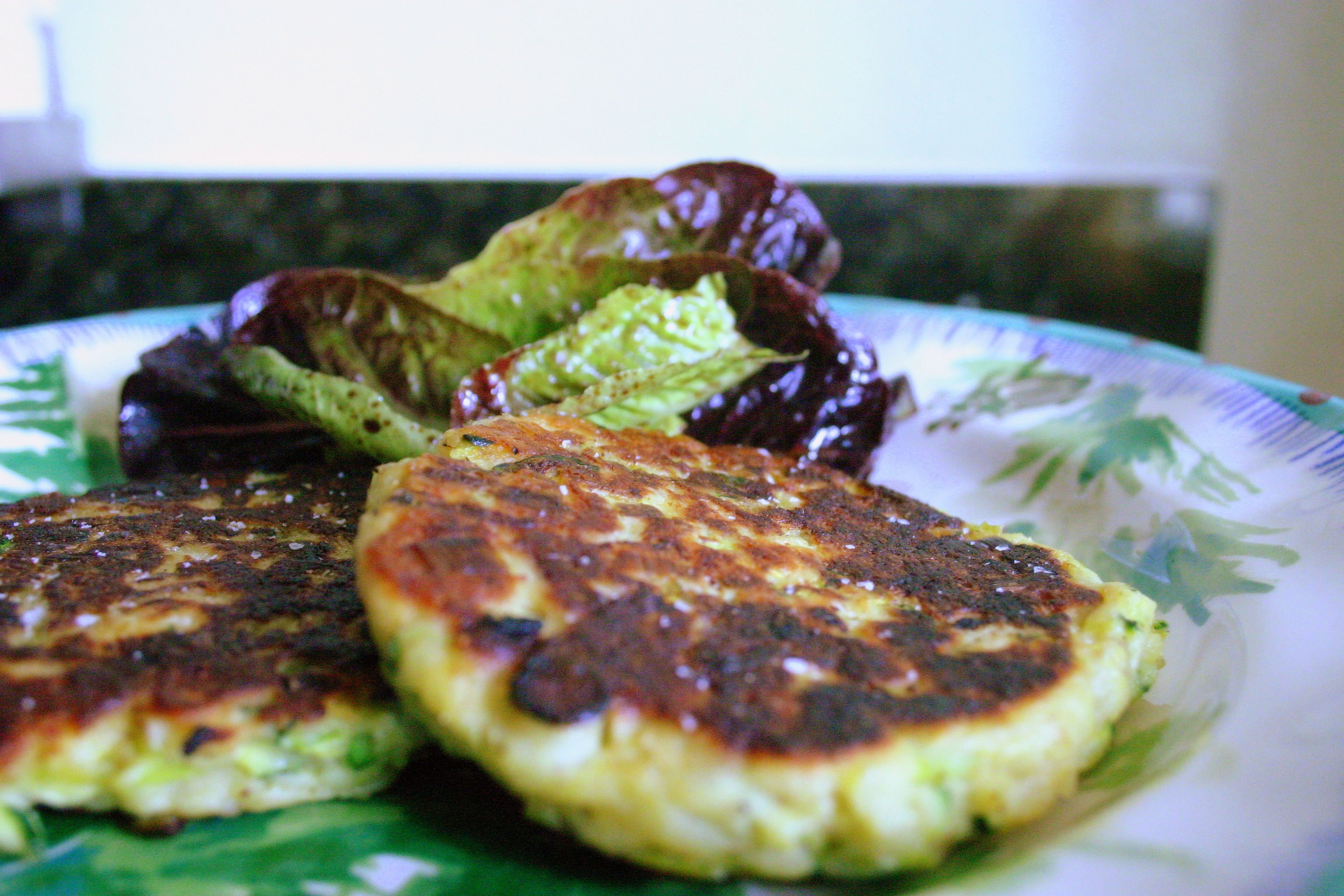
Fry the pancakes on a cast iron skillet over medium heat. This will take about 4-5 minutes on each side.
Enjoy with some creme fraiche or sour cream on the side!

Kitchen Adventures: Vietnamese Coffee Ice Cream

This past Saturday, something monumental happened. Something that hasn’t happened in Seattle for a few solid weeks. The sun came out. And this wasn’t just a tease. It was solid sunshine all day with temperatures soaring into the 60s. (Don’t scoff–that’s considered legitimate shorts weather up here).

We spent a wonderful day at the dog park and just relaxed. All that sun made me really crave a good old fashioned warm weather dessert, so I decided to try David Lebovitz’s recipe for Vietnamese coffee ice cream.

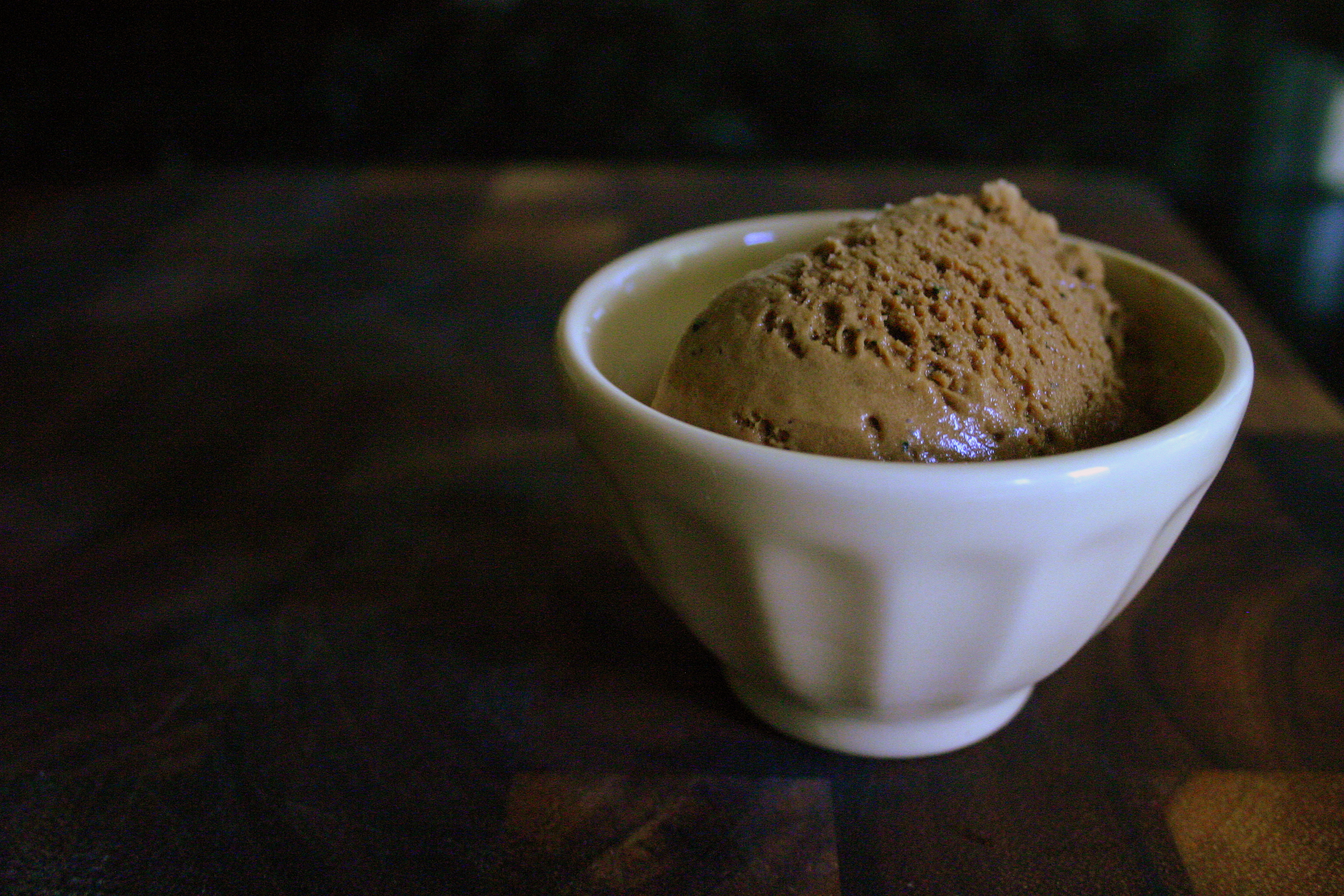
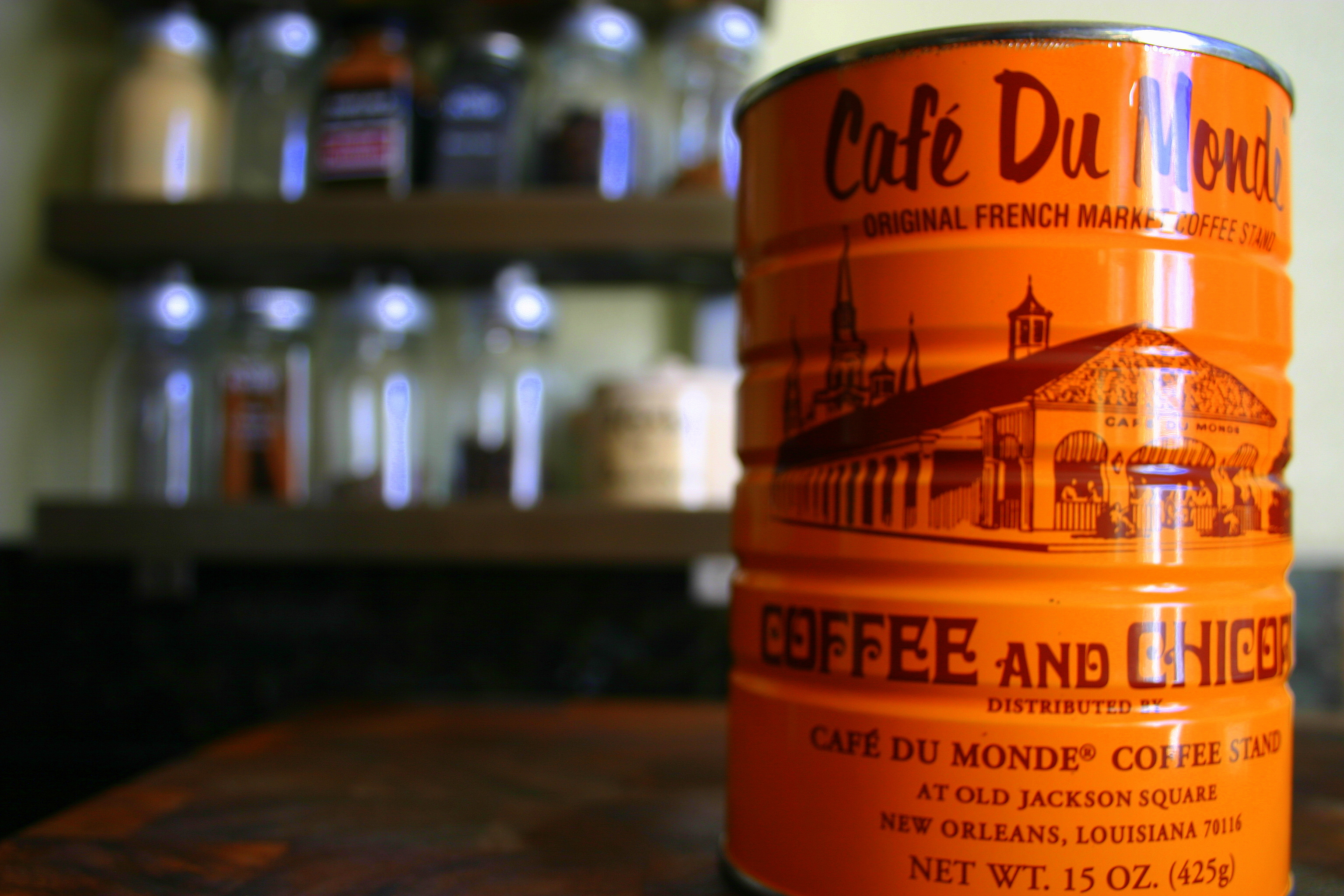
I used Coffee Du Monde, because I love  its delicious chicory  flavor. If you are a Vietnamese iced coffee purist, you can use Trung Nguyen. This was a quick, easy, and delicious ice cream with minimal ingredients. It’s not custard based, so you don’t have to deal with any eggs or cooking. Winning. However, this ice cream does have a softer consistency and melts very quickly. So eat it fast!

Vietnamese Coffee Ice Cream
Adapted from Perfect Scoop by David Lebovitz via Cafe Fernando

Yield: About 1 quart

  • 1 cup sweetened condensed milk
  • 1 1/2 cup water
  • 1/2 cup + 1 teaspoon ground coffee, divided
  • 1/3 cup whole milk or heavy cream
  1. Place 1/2 cup ground coffee into French press. Add 1 1/2 cup boiling water, and steep for about 15 minutes for maximum coffee flavor. After straining you should be left with about 1 cup of coffee. Alternately, you can do this in an electric coffee maker using the same proportions.
  2. Whisk together 1 cup condensed milk, 1 cup coffee, and 1/3 cup milk or heavy cream. Chill the mixture thoroughly (about 12 hours in the fridge or 3-4 hours in the freezer), then freeze in your ice cream machine according to the manufacturer’s instructions. While machine is running, sprinkle in 1 teaspoon ground coffee. (Increase or decrease amount depending on personal preference).
  3. Transfer ice cream into a container with lid and place in freezer to harden. I recommend turning your freezer up to the highest setting.

I love the taste of Cafe Du Monde in my Vietnamese ice coffee, but you can use any darker roast coffee you prefer.

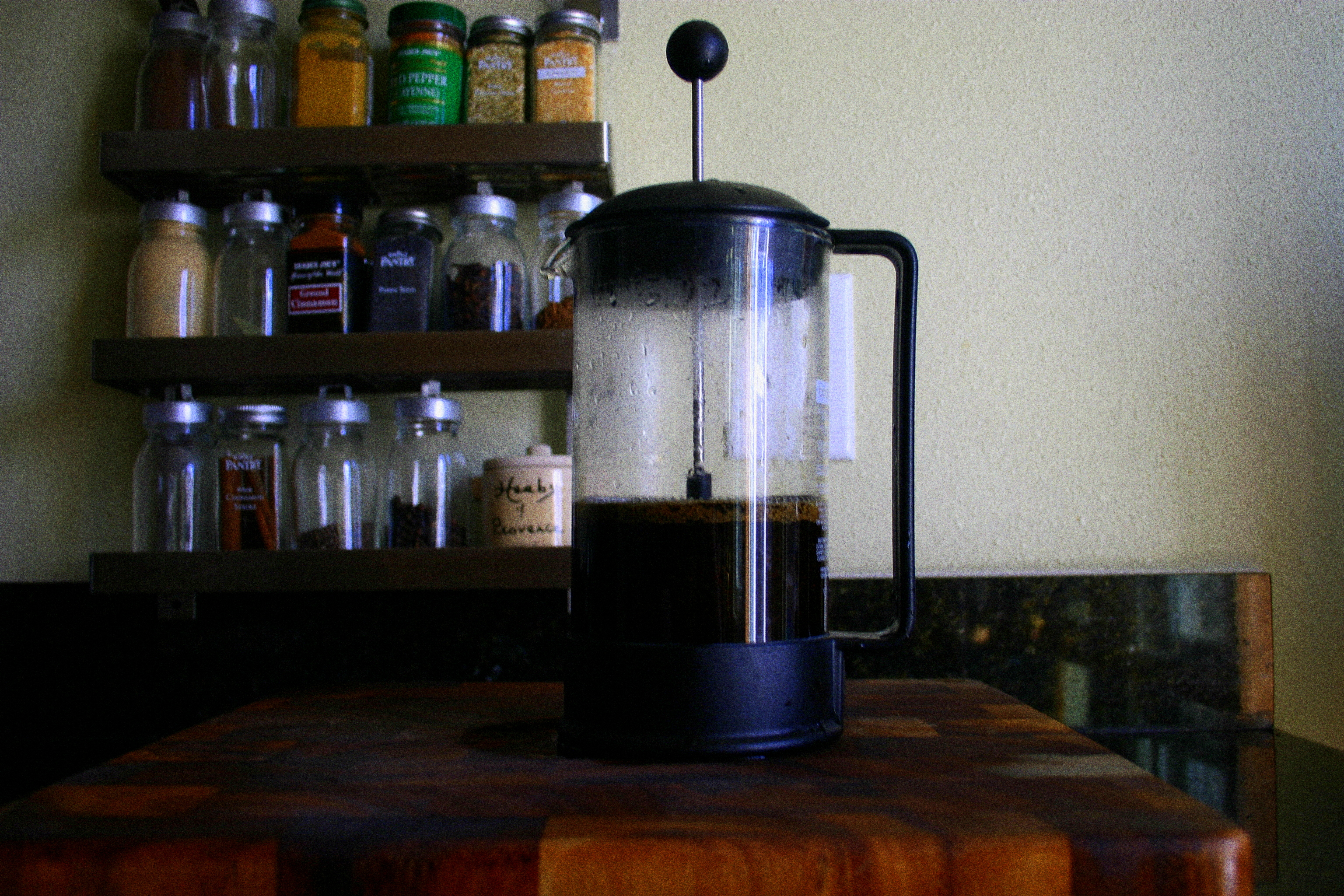
Allowing the coffee to steep in a French press will result in a more robust coffee flavor. Never a bad thing! You can also use a normal electric coffee maker.

The recipe is so simple–just mix all the ingredients together, and refrigerate in a container until thoroughly chilled.

My trusty Kitchen Aid ice cream attachment worked well for this task, but any ice cream maker will do. Sprinkle in about a teaspoon of coffee grounds while them machine is churning for extra coffee flavor.

My very favorite little kitchen helper soaking up the sun and wishing she could have a taste of that ice cream.

Kitchen Adventures: Fresh Homemade Ricotta

Homemade ricotta is one of the best kept secrets. It’s affordable, delicious, and oh so easy. Once you try ricotta from scratch you will never be able to go back to store bought. Technically, ricotta (which means “re-cooked” in Italian), is actually made out of whey left over from the production of a rennet-based cheese (such as mozzarella).  But this process is long and laborious, so unless you’ve got a lot of free time on your hands, let’s take the short cut, shall we?

This process takes about 30 minutes to complete, and about an hour of hands-off time to let the ricotta drain. There are a couple of important things you need to know before you get started. First, the dairy. Your ricotta will be as good as the milk and cream that you use. You don’t necessarily need to spend a small fortune at a the farmer’s market if that is not within your budget, but at least try to buy a higher quality brand of dairy. (I bought mine from TJ’s) Most importantly, do not buy any dairy labeled “ultra-pasteurized” or “ultra-high temperature” for ricotta, or any cheese for that matter. Pasteurized milk is what you want. I repeat: DO NOT use ultra-pasteurized, or you will fail miserably and hate me forever.

There are numerous ricotta recipes making the rounds, but my favorite is an old Gourmet magazine that uses the acidity of fresh lemon juice to produce the ricotta. In terms of special equipment, you will need fine-mesh cheesecloth. However, if you have a very fine-mesh colander, you can get away without the cheesecloth at all.

Homemade Fresh Ricotta
Adapted from Gourmet

Yield: About 2 Cups

  • 2 quarts whole milk (8 cups)
  • 1 cup heavy cream
  • 1/2 teaspoon salt
  • 4 tablespoons fresh lemon juice
  1. Line a large colander with one layer of fine-mesh cheesecloth or a few layers of standard cheese cloth. Place colander over a large bowl.
  2. Slowly bring  2 quarts milk,  1 cup cream, and 1/2 tsp salt to rolling boil in a 6-quart heavy pot over moderate heat, stirring occasionally to prevent scorching. Resist temptation to crank the heat up to high.
  3. Once the milk mixture starts boiling, pour in 4 tbs lemon juice. Reduce to a simmer and gently stir until mixture curdles, about 2-4 minutes.
  4. Pour milk mixture into lined colander and let drain for up to an hour. For a creamier consistency, put the ricotta in a food processor with a splash of heavy cream and pulse a couple of times. Keep in air tight container in the fridge for up to two days.

Making ricotta requires minimal ingredients–essentially dairy and an acid. I like the taste of lemon in my ricotta, but you can also use good quality vinegar instead. Alternately, some recipes use buttermilk.

SLOWLY bring milk mixture to a boil, and be sure to keep stirring periodically so it doesn’t burn.

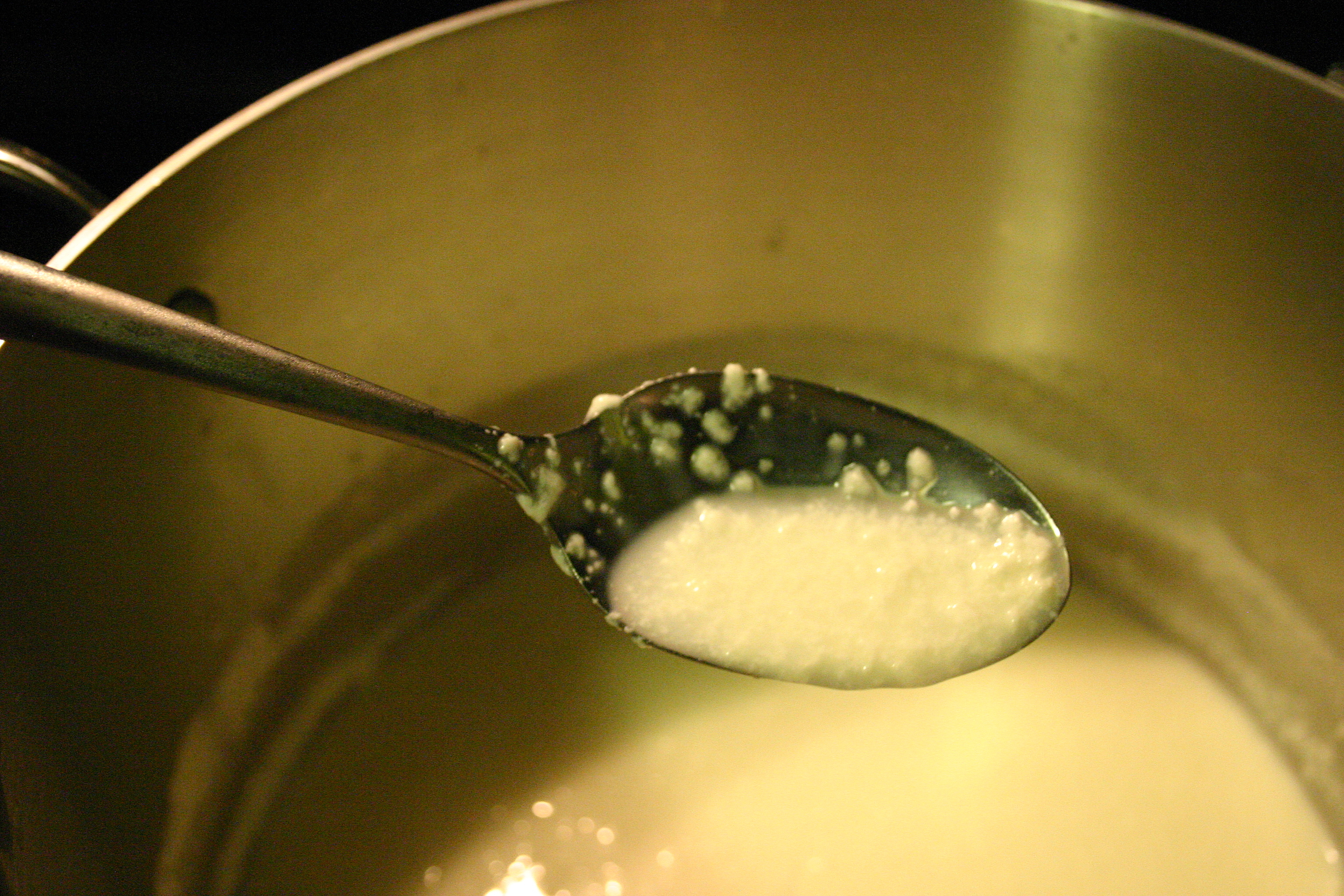
After you pour the fresh lemon juice in, turn the heat down to a simmer and stir very gently. The mixtures should begin to curdle after a minute or so. If your mixture doesn’t start to curdle, don’t freak out…like me! Just calmly pour in more lemon juice one teaspoon at a time until you see a reaction, and be sure the mixture is really simmering.

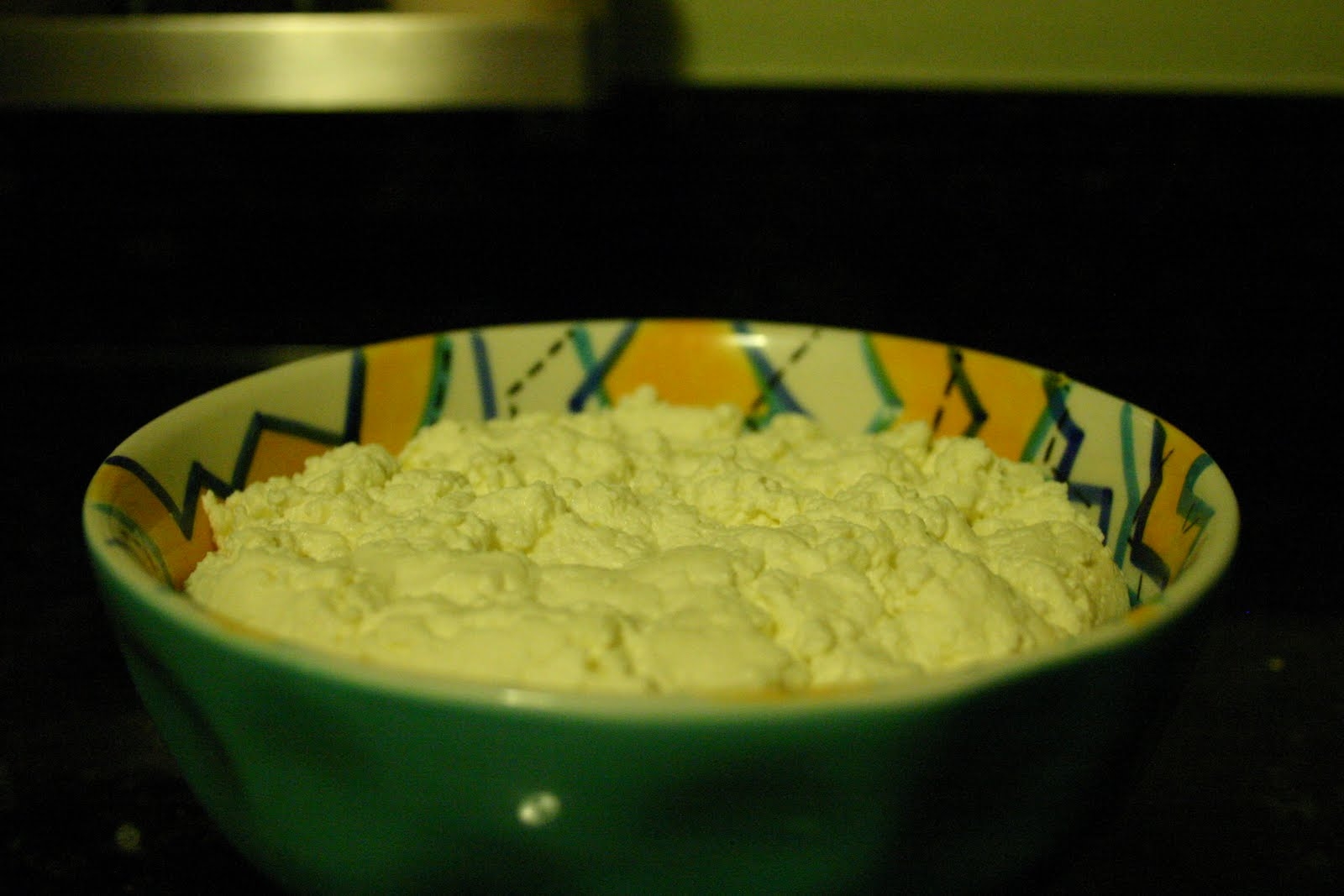
After a couple of minutes, the curds will separate from the whey, like so.

Pour the mixture into the cheesecloth-lined colander and drain. You can place a bowl under the colander to catch the whey. I’ve heard that this can be used in place of buttermilk in recipes. Or as plant food. Or to thicken soups. I have yet to try this.

Now, what to do with all this ricotta? Here are some ideas to get you started:

  • Ricotta Gnocchi (delicious and easy! Post on this coming soon)
  • Lemon Ricotta Cookies
  • Serve warm as an appetizer with bread. Drizzle some olive oil on top and sprinkle with kosher salt. Add some fresh herbs, sun dried tomatoes, or toasted pine nuts if you have some handy.

Kitchen Adventures: Homemade Beef Jerky

I’ve always had a weakness for beef jerky. There’s something satisfyingly primitive about tearing into a piece of dried meat and all its salty goodness. It’s the perfect snack–high in protein, low in fat, and undeniably delicious.  I’ve always eaten store-bought beef jerky out of convenience, but the sad fact is that the  mass produced stuff is chock full of preservatives, artificial flavorings, and nasty additives.

I recently learned that beef jerky is surprisingly simple to make at home with nothing more than a few quality ingredients and your oven–no dehydrator required. But there’s one catch. Homemade jerky does take a little time–six hours to marinade and four hours to bake,  to be exact. But before you freak out, keep in mind that there is very little hands-on effort required. This is actually a great lazy Sunday activity. Prep the meat when you wake up, marinade while you grab brunch and run errands, then cook the jerky while you shamelessly watch hours of Real Housewives on Bravo. Or, perhaps you could actually do something productive around the house while you’re waiting. Your call! But the bottom line is that this doesn’t require a ton of effort, and the results will be worth it.

One of my favorite recipes for beef jerky comes from Rachel Graville, proprietor of Iris Cafe in Brooklyn Heights, where she also sells her delicious hand-cut beef jerky. I made a half batch of the recipe below, because I didn’t have enough baking sheets/cooling racks to accommodate two pounds of meat. A full batch will yield about one pound of jerky, while a half batch will yield about 1/2 pound–which I found to be perfect for two people.

Black Pepper Beef Jerky
Adapted from Rachel Graville via Food & Wine
  • 2 pounds trimmed beef top round (London broil) or bottom round, about 1 1/2 inches thick
  • 3 cups amber ale or lager
  • 2 cups soy sauce
  • 1/2 cup Worcestershire sauce
  • 2 tablespoons cracked peppercorns, plus additional coarsely ground pepper to sprinkle on meat before it goes into the oven
  1. In a large bowl, mix 2 tbs cracked peppercorn, 2 cups soy sauce, 1/2 cup Worcestershire sauce, and 3 cups beer.
  2. Slice beef 1/4 inch thick either with or against the grain (I prefer against, since it’s easier to chew). Cut away as much fat as possible from the strips to prevent the jerky from spoiling once cooked.
  3. Place sliced beef in the bowl with the marinade mixture, making sure each piece is coated. Cover and refrigerate for 6 hours.
  4. Set three cooling racks on top of three baking sheets. Remove beef from the marinade and pat dry with paper towels or a clean dishtowel. Arrange beef on the racks and sprinkle coarsely ground pepper on top of meat to your liking (about 1-2 tbs).
  5. Bake for about 4 hours at 175° F, until the jerky is firm and almost completely dry, but still chewy. (Note that the original recipe specifies a 200° cook time, but I preferred the taste at 175° which may take a little longer. If you are pressed for time, 200° should still taste delicious.) Let cool completely on the racks before serving.

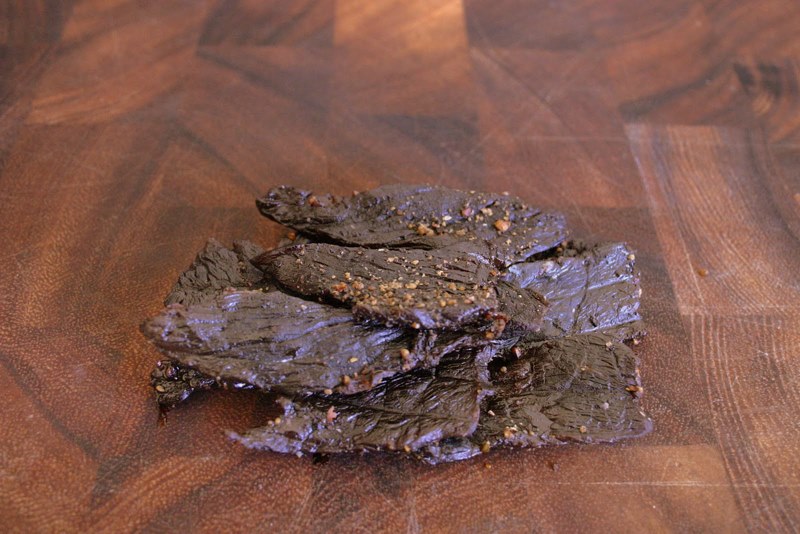
Use a mortar and pestle, food processor, or coffee grinder to coarsely crush peppercorns for marinade. To season the meat with additional pepper before it goes into the oven, I use my trusty pepper mill. The tricky part is slicing the meat thinly, without sending yourself to the ER. Try putting the meat in the freezer for about 30 minutes prior to slicing. This should do the trick. I like my beef jerky pretty thick so I go for 1/4 inch thick slices. The jerky will harden as it cools, so don’t let it get too dry in the oven. Store your jerky in the fridge in either a plastic baggie or mason jar. I also think this makes great gifts or favors! I found this simple recipe to be a great starting point. From here, you can experiment with different flavors and spices. Rachel Graville has a couple of other fabulous jerky recipes including Sweet & Spicy Jerky and Mexican Lime Jerky. Om nom nom nom.

Leavenworth Trip & Homemade Soft Pretzels

Last weekend we took our annual snowboarding/wine tasting trip to Leavenworth with our friends Rebecca and Jason. If you’re not familiar with Leavenworth, all you really need to know is its tagline: Your Bavarian Getaway. Jason and Rebecca introduced us to this quiet, German-themed town a few years ago, and it’s been an annual tradition ever since.

Having made the trip for the past four years, we’ve established a few traditions…and learned from some past mistakes. Well, at least I have after an unfortunate incident my first year involving wine, Eastern Washington seafood, my boyfriend’s erratic driving, and projectile vomit in the Bavarian-themed Safeway parking lot. Lesson learned. As far as traditions go, we always hit up the free breakfast at the lodge for some subpar gravy and biscuits, drink a lot of wine and make poor financial decisions at the cheese shop, and head to the one bakery in Leavenworth for a soft pretzel.

You would think that a town known solely for its German theme would produce a mean soft pretzel–that just seems logical, right? But that leads me to my second lesson learned in Leavenworth: just because a business has the word ‘haus’ in its name doesn’t necessarily mean it’s going to have good German food. Nonetheless, Rebecca and I always hit up the pretzel place where we face perennial disappointment. They are usually cold, dry, and skimpy on the butter. Rebecca claims that it was better last year, but I’m pretty sure it’s the imagination playing tricks on her.

When we returned from our trip, I was craving a warm, homemade, buttery pretzel more than ever. I decided  to give this pretzel recipe a try after reading some high ratings. I didn’t have any pretzel or rock salt on hand, so I just brushed the baked pretzels with some melted butter. (Which I highly recommend you do even if you top with salt).

If you don’t have a stand mixer, not to worry! Just knead the dough by hand the old fashioned way. I also divided the recipe in half to prevent myself from OD’ing on pretzels. They were in fact delicious. The only change I will make next time is rolling the dough out much thinner than pictured since it rises a bit in the oven.

In conclusion, I leave you with Leavenworth’s latest marketing ad–which is grossly inaccurate but thoroughly entertaining. See you next year, Woody Goombsa.

Tea-Flavored Shortbread

Following directions has never been my strong suit. And cooking is no exception to this rule. A lot of eyeballing, estimating, experimenting, and finger taste testing goes on in my little apartment kitchen.  As a result, I am the first to admit that I’ve had my fair share of complete and utter food fails—most of them baking-related. (Go figure)

So when I happen upon an easy, delicious recipe that I like, I find myself using it over and over again. I recently tried this recipe for Earl Grey Shortbread. It’s simple, foolproof, and makes you look like a star in the kitchen even if you aren’t.

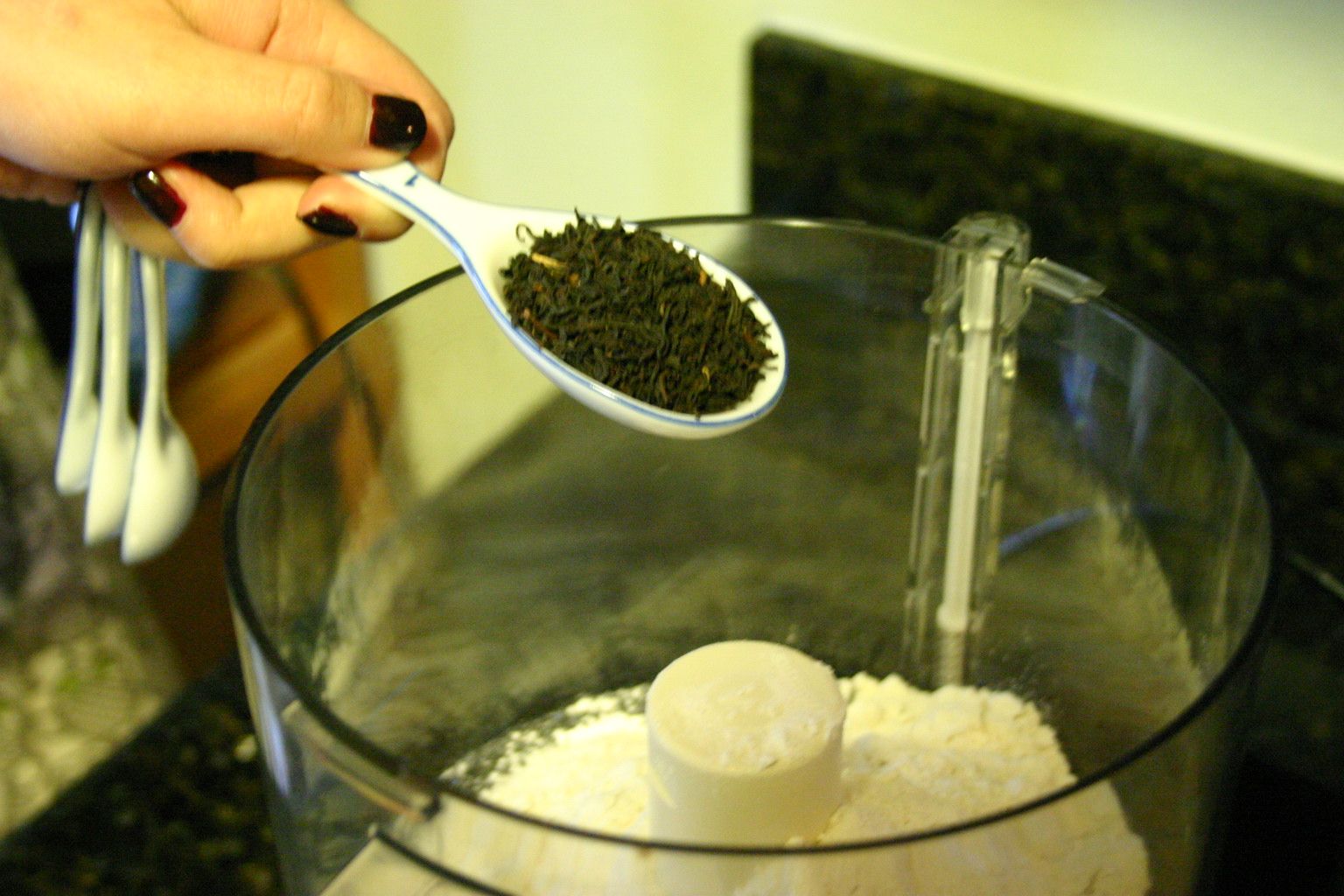
I’ve experimented with a few different tea flavors. Matcha tastes amazing and gives the cookie a vibrant green color. If you aren’t familiar with matcha, it’s basically just green tea that has been finely milled into powder form. Since it’s pretty potent stuff, use between 1-2 tablespoons if you are making a full batch. (The amount you use will largely depend on the quality of your matcha and your tastes) You can basically use any loose-leaf tea in this recipe–so go crazy! I’ve tried chai shortbread which turned out fabulous as well.

If you’re feeling fancy, roll the edges of each sliced cookie in demerara sugar before you put them on the baking sheet. This adds a nice crunch. I found my demerara at Whole Foods for a couple of bucks—it’s just  coarse-textured raw sugar.

I can’t tell you how much I love this base recipe. Enjoy!