Cold-Brewed Iced Coffee

We spent the past glorious week in Missoula, Montana–hiking, sleeping in, cooking, eating bison burgers, and just unwinding in general. Jeff’s mom has a beautiful house that sits on top of a mountain overlooking miles of tree-studded rolling hills. It’s a completely picturesque environment and always feels like a retreat from reality when we come to visit. And who doesn’t need to escape reality every once in a while.

It was in the mid to high 80s and sunny last week, which many in Seattle consider to be uncomfortably hot. But secretly I love those hot summer days. Every once in a while I crave that kind of heat–the kind that practically demands an ice cold beverage and legitimizes booty shorts as acceptable attire. Must be the Californian in me.

Cold  brewing has been making the rounds for a few years, and I just haven’t gotten a chance to try it until now. Now that I have, I don’t think I can ever go back. I’ve tried various methods for making iced coffee (french press, electric, stovetop percolator, you name it), and all have resulted in a diluted, disappointing mess. Cold brewing defies conventional logic by steeping the coffee at room temperature for an extended period of time rather than using heat to expedite the process. While this method takes more time (12 hours or overnight), it results in tastier, less acidic iced coffee. I recommend doubling or tripling the recipe and keeping the concentrated coffee on hand.

Cold-Brewed Iced Coffee
Adapted from New York Times

Yield: 2 servings

  • 1/3 cup ground coffee (medium-coarse grind is best)
  • Milk and sugar to taste

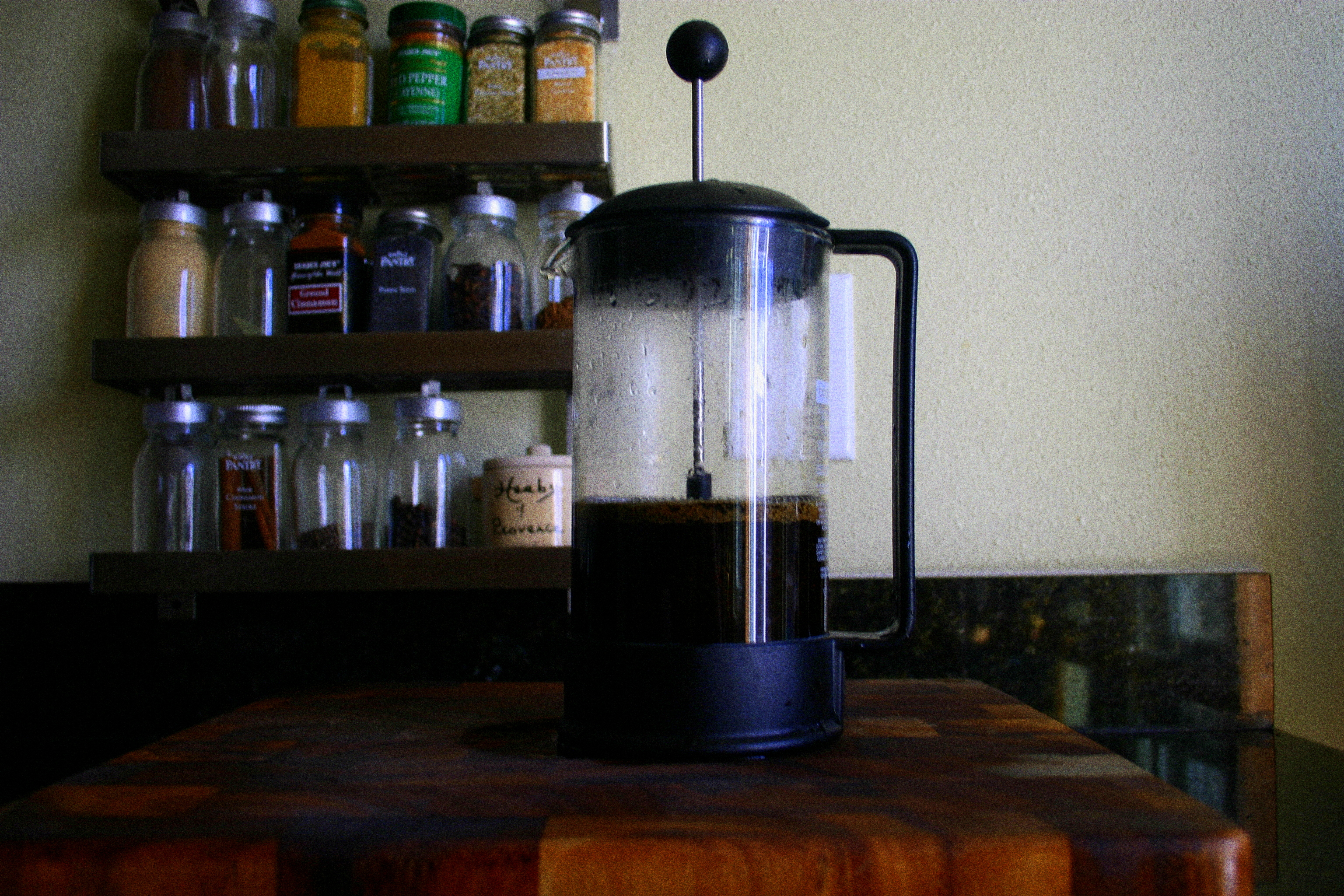
1. In a lidded container or jar, stir together coffee and 1 1/2 cups water. (Alternately, you can do this in a french press to allow for easy straining). Cover and let rest at room temperature overnight or 12 hours.

2. Strain twice through a coffee filter, a fine-mesh sieve or a sieve lined with cheesecloth. (Or strain through the french press if using). In a tall glass filled with ice, mix equal parts coffee concentrate and water, or to taste. Top with milk and/or sugar if desired.

After waiting 12 hours for the coffee to steep at room temperature, I used a coffee filter-lined sieve to strain the liquid. You can also use cheese cloth if you’ve got some handy.

You can keep the coffee concentrate in the fridge for up to a week so it’s ready when you need a caffeine fix. Check out the view from the kitchen–how could you not want to cook in here!

I used a 2:1 coffee to water ratio because I like my coffee strong. There really isn’t a science to this. It’s all about personal preference–some people even like to drink the concentrate straight. Add a splash of soy creamer and…bliss.

During our trip, Jeff and I spent a day at the magnificent Glacier National Park, which is about two hours outside of Missoula. I had big dreams of taking pictures of the gorgeous landscape with our nice SLR camera. In true Jeff and Lauren form, we forgot to charge the batteries. True story. After a brief moment of pure chaos and finger pointing, we just looked at each other, determined that we were both big idiots, and started laughing.

And thus the iPhone saves the day once again. Here are a couple of snapshots I took using Instagram:

Lake McDonald. Sadly, part of Going-to-the-Sun Road was closed because of late snow. While we couldn’t make it all the way to the top, we still got to see some magnificent sights.

Avalanche Lake–a four mile hike round trip. This picture really doesn’t do it justice. It is completely surreal to be surrounded by these enormous mountains. Here’s Avalanche Lake in 1901–it’s amazing how little has changed.

Warm and happy on a hike at The Loop. If you like adventure, you can actually hike in about four miles and stay at The Granite Park Chalet which was built in 1915. In the morning, you can hike all the way up to Logan Pass which is sure to have some amazing views. The Chalet is only accessible by trail and you have to bring all of your goods–food, water, linens, etc. Not exactly a five star hotel, but an experience none the less. This is definitely on the books for us when the whole park is open!

Morel and Spring Pea Pasta

Every now and then, I venture over to the University District neighborhood of Seattle–my old college stomping grounds. Only these days my objective is not to buy cheap pitchers of  PBR at Dante’s or the hit up the Gyro-cery for a greasy midnight snack. Nope, I go to the U-District to check out the gorgeous produce at the year-round farmers market. God, I feel old.

We’ve had an unusually cold winter and spring (even for Seattle), and I was getting a little bored of the beet, kale, chard, and carrot routine. So when I saw the bright pink rhubarb, oddly shaped heirloom tomatoes, and little Japanese cucumbers at the farmers market, I nearly squealed with excitement. I also ended up buying some beautiful shelling peas and going a little crazy at the mushroom stand. To me, a good selection at the farmers market almost trumps a Nordies Anniversary Sale. Almost.

I decided to make some fresh pasta with my (yep, you guessed it) Kitchen Aid pasta attachment, topped with a creamy morel and pea sauce. You can use any type of fresh or dried pasta your heart desires. I love how the touch of heavy cream and zest of fresh nutmeg brings out the flavors of the morels without overpowering. It’s the perfect springtime pasta dish, in my opinion!
Morel and Spring Pea Pasta

Yield: 2 Servings

  • 2 servings of fresh or dried pasta
  • 1 oz (3-4 medium sized) morel mushrooms, sliced into round strips and cleaned
  • 1/2 cup heavy cream
  • 1/2 cup vegetable or chicken stock
  • 2/3 cup freshly shelled or frozen peas
  • 1 tablespoon butter
  • 1 small shallot, finely diced
  • Freshly grated Parmesan to finish (optional)
  • Freshly grated nutmeg to taste (optional)
  • Splash of olive oil
  • Salt and pepper to taste
  1. Bring a large pot of lightly salted water to a boil and add pasta. Drain and set aside when cooked.
  2. While pasta is cooking, melt 1 tablespoon of butter in a heavy pan over med heat. Add 1 diced shallot and 1oz morel mushrooms. Saute until shallots are translucent, about 2-3 minutes.
  3. Turn heat up heat to med-high. Add 1/2 cup vegetable or chicken broth and reduce until only about a quarter of the liquid remains in the pan.
  4. Add 1/2 cup heavy cream to pan and grate in some fresh nutmeg to taste. Reduce sauce by about half, stirring constantly until thick. When the sauce has almost reached your desired consistency, stir in the peas and cook just until tender, about 1-2 minutes. There is nothing worse than overcooked peas–so be very careful!
  5. Take the pan off the heat.  Salt and pepper to taste. Toss freshly cooked pasta with a splash of olive oil and top with sauce. Finish off with a little freshly grated Parmesan cheese if you wish.

The combination of morels and peas is simply delicious. To wash the morels, submerge the sliced mushrooms in a bowl of water and try to get all of the debris off of them. Then, send them through a salad spinner to ensure that they are completely dry. I don’t think this is a very conventional method, but the mushroom guy told me to do it, and it worked like a charm.

I am one of those strange people who finds shelling peas immensely therapeutic. Every pea will have a seam down the middle–find the end of the seam, pull it down, and open the pod. It may be a little frustrating at first but you’ll get the hang of it.

I can’t emphasize the use of freshly grated nutmeg enough. If you’ve never worked with whole nutmeg before, it’s not intimidating at all! Just scrape the nutmeg against the finest holes of a box grater a few times or use a microplane grater.

And I leave you with a sneak peak at my Japanese cucumbers getting ready to be pickled in some rice vinegar, sugar, and salt. Pretty exciting stuff!

Sweet and Salty Bacon Jam

Wow, what a week. I just came back from an awesome trip to the Bay Area where I relaxed with my family and caught up with old friends. During my trip, an extra awesome thing happened: my homemade beef jerky post was featured on Freshly Pressed. My lowly little blog making it onto the front page of WordPress was an unexpected, but welcome surprise! Thank you sincerely to everyone who sent me feedback.

And now….back to reality!

I decided to try my hand at bacon jam a couple weeks ago because I was craving a sweet and salty sensation. Bacon jam has been popular for quite some time now, thanks to our local Skillet who sells it by the jar. To my pleasant surprise, it is also very easy to make at home. It does require a couple hours of cook time, but the trade off is that you have more control over the balance of flavors. Totally worth it in my book. Be forewarned that a full batch of this recipe completely filled one of my three cup mason jars. But who can ever have too much bacon jam?

This condiment adds an extra special touch to eggs, grilled cheese sandwiches, burgers, baked potatoes, cheese and crackers, and more. A little bit goes a long way, so when eaten in moderation it’s not completely unhealthy. Right!?

It’s a bit unfortunate that this bacon jam post came on the heels of my old beef jerky post being featured, because now I look like some carnivorous freak. I swear it’s just a coincidence! More fruit and veggie posts coming soon, I promise.

Bacon Jam
Recipe adapted from Martha Stewart using The Perfect Pantry method

Yield: About 3 cups

  • 1 -1/2 pounds sliced bacon, cut crosswise into 1-inch pieces
  • 2 medium yellow onions, diced small
  • 3 garlic cloves, smashed and peeled
  • 1/2 cup cider vinegar
  • 1/2 cup packed dark-brown sugar
  • 1/4 cup pure maple syrup
  • 3/4 cup brewed coffee
  • Cayenne pepper to taste
  • Salt to taste
  1. Cook bacon in a large cast iron pot over medium heat, stirring occasionally, until fat is rendered and bacon is lightly browned (approximately 20 minutes, depending on the thickness of the bacon). With a slotted spoon, remove the bacon and place on a platter lined with paper towels.
  2. Pour off all but 1 tablespoon of bacon fat. (Save the fat for another delicious use). Add the onions and garlic, and cook until onions are translucent. Add 1/2 cup vinegar, 1/2 cup brown sugar, 1/4 cup maple syrup, and 3/4 cup coffee, and bring to a boil, stirring and scraping up the bacon bits from the bottom of the pan. After 2 minutes, add the bacon, and stir to combine.
  3. Reduce heat to simmer, and cook, uncovered, for 2 hours, stirring occasionally to make sure nothing is burning. If the jam seems to be cooking too fast, add 1/4 cup of water every now and then.
  4. Toward the end of the 2 hours, taste the jam and see what flavors you need to add. This recipe is about finding the right balance–and it just comes down to personal preference. I added some salt to balance out the sweetness, and some cayenne pepper give the jam a nice spicy kick.
  5. When the liquid is syrupy, remove the pot from the heat. Let it sit for 5 minutes, then transfer contents to a food processor and pulse 3 or 4 times until coarsely chopped. Transfer to a heat-resistant bowl. Let the jam cool, then refrigerate in an airtight container for up to a month.

Start by rendering the bacon, and draining off all but one tablespoon of grease. Save the remaining grease in an airtight container in the fridge for another use.

Saute the onions and garlic to bring out their delicious flavors.

Add the remaining ingredients, grab a good book, and wait for the magic to happen.

Bacon mixture after an hour of cooking. Stir periodically to make sure it’s not cooking too quickly and burning.

Toward the end of the two hours, do a taste test and see if you want to add any salt or cayenne pepper. If you’ve never worked with cayenne before, be very careful–a little goes a long way. When the mixture takes on an almost syrupy consistency, you’ll know it’s ready to hit the food processor.

Use your bacon jam on absolutely anything. My boyfriend Jeff was a huge fan of my grilled cheese with arugula and bacon jam. It’s also delicious simply spread on a piece of toast with a poached egg on top.

What would do you do with your bacon jam? Do you have any creative ideas for the leftover bacon grease?

Ocean-Inspired Accessories

I am just in love with Tiffany Chou’s oceanic jewelry line which features shells, crabs legs, seahorses, mussels, coral, and more. I especially love the NYC-based designer’s urchin-textured bangles, and the coral cuff. Gorgeous, gorgeous! I discovered her jewelry via Matchbook Magazine, which I cannot speak more highly of. Enjoy!

Images: http://www.tiffanychou.com/

1. Attina in Gold no. 3 Bracelet $240.00
2. Oh My Urchin Bracelet $42.00
3. Cabbages & Kings Necklace$45.00
4. She Shell Necklace $48.00 
5. Listen to the Ocean Necklace $54.00
6. Sleepy Seahorse Necklace $44.00
7. My Fair Coral $240.00
8. On the Rocks Bracelet $125.00; Put a Crab on it Ring $50.00Coral Jr. Bracelet $125.00

Leek, Potato, and Zucchini Pancakes

I am a self-confessed veggie nerd. Growing up, my mom never had a problem getting me to eat everything from broccoli to eggplant. I wasn’t a picky child at all. In fact, pretty much the only thing I wouldn’t eat was a McDonald’s hamburger. Now I know why. Good call, five year old me. You would think that would make me a dream child, right? Then, enter my teenage girl years, during which there was enough door slamming, name calling, and eye rolling to far offset any previous form of good behavior. (Sorry, Mom!)

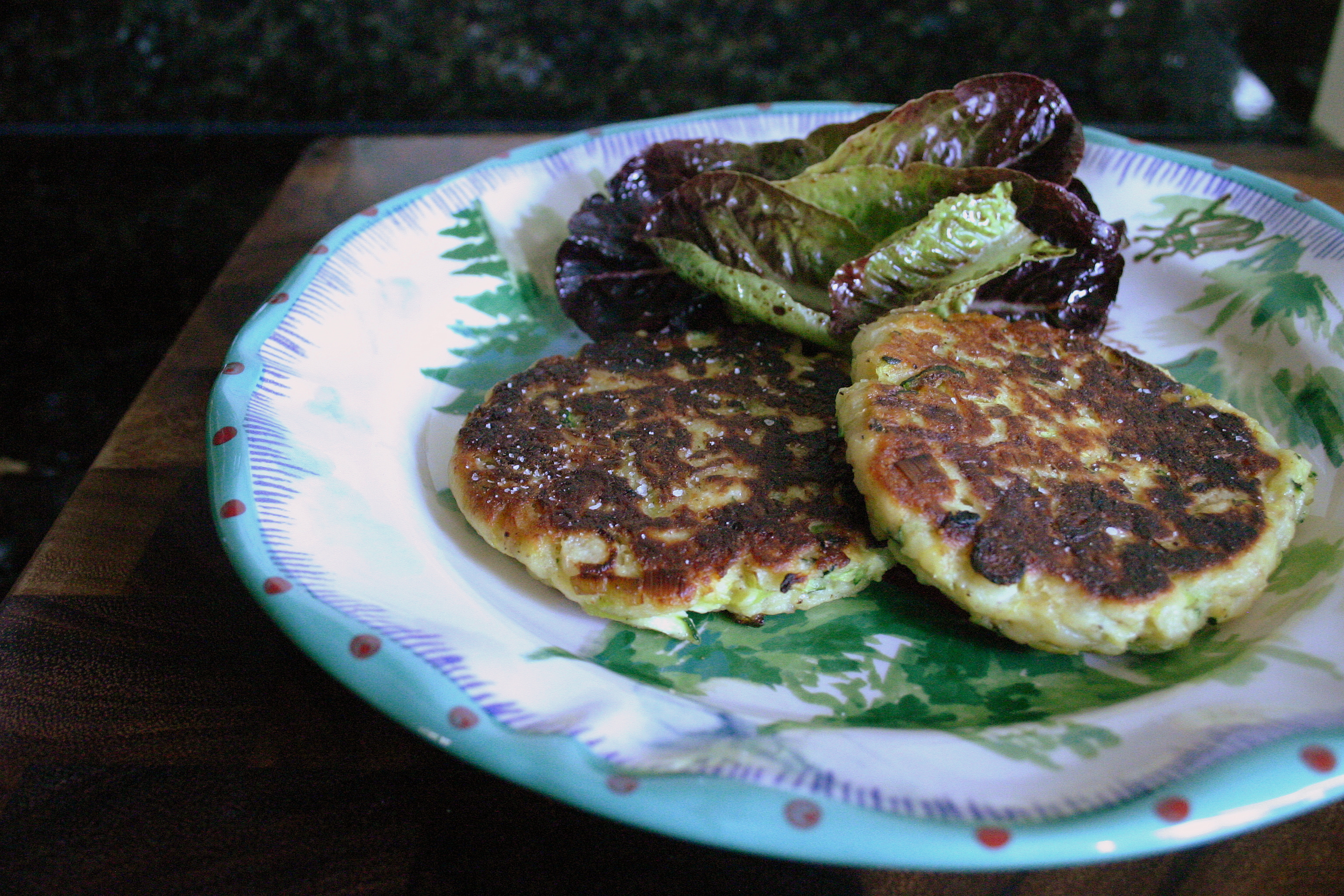
Luckily, I grew out of that phase, but still love my veggies. Unsurprisingly, I get really excited to break open my produce boxes during this time of the year. The other week, I received some beautiful leeks and racked my brain trying to figure out what recipe would do them justice. I finally decided on a recipe for leek, potato, and zucchini pancakes from NYT–the perfect springtime meal. My changes include a pinch of cayenne pepper, creme fraiche or sour cream for serving, and nuking the potato in the microwave instead of baking them in the oven to cut down on time.

As it turns out, leeks are all the rage this week! Check out Smitten Kitchen’s leek toasts with blue cheese and NYT’s green garlic, potato, and leek soup.

Leek, Potato, and Zucchini Pancakes 
Adapted from New York Times

Yield: 2 servings

  • 1 medium russet potato (8 ounces)
  • Salt and pepper
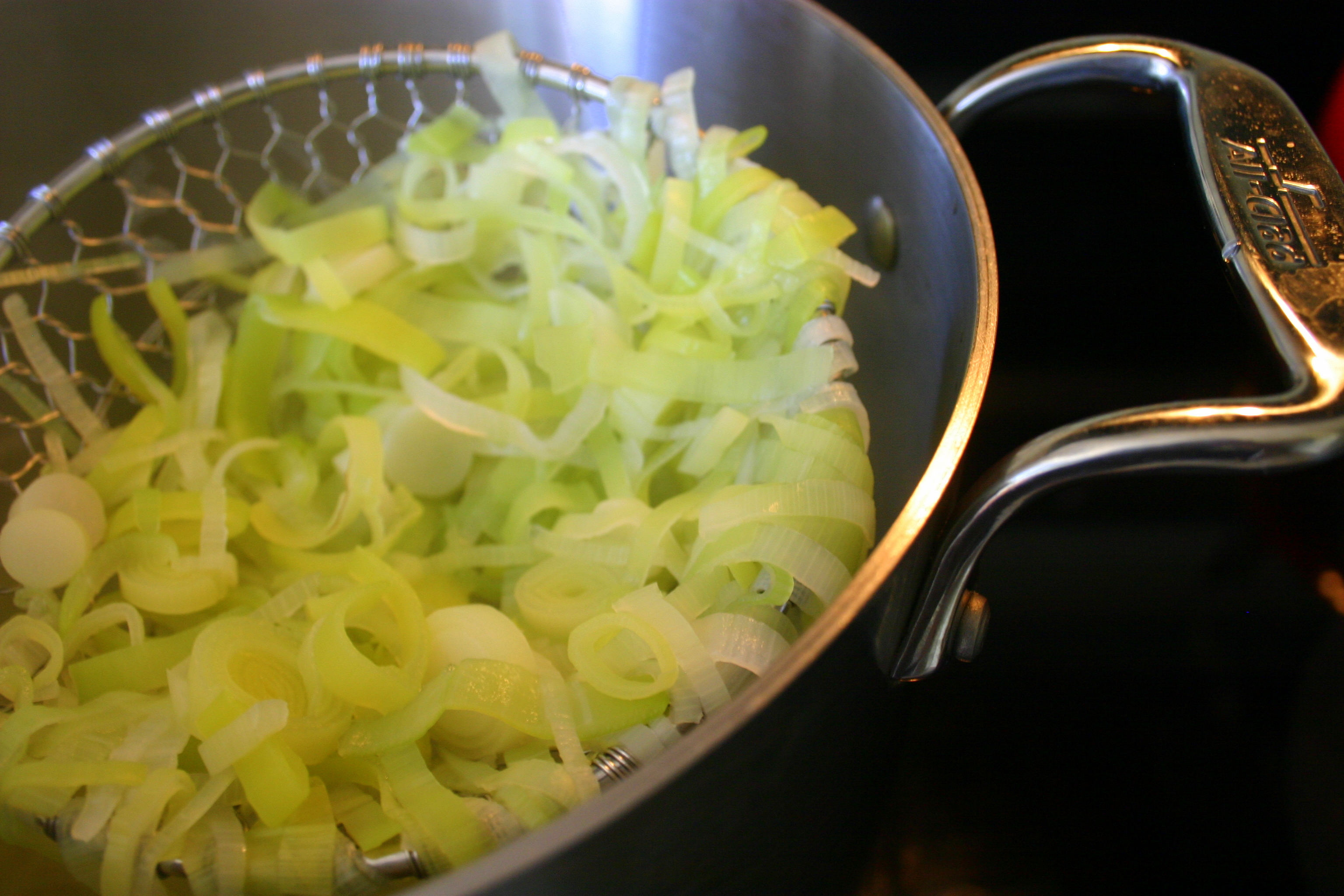
  • 3 whole leeks, white and light green parts, sliced crosswise into 1/8-inch-wide pieces (to make about 4 cups), and thoroughly rinsed
  • 1 cup grated zucchini
  • 1 large egg, beaten
  • 1/4 cup all-purpose flour
  • 1/3 cup grated Parmesan cheese
  • 2 tablespoons chopped fresh parsley leaves
  • 2 tablespoons canola or olive oil
  • Pinch of cayenne pepper (optional)
  • Creme fraiche or sour cream for serving (optional)
  1. Pierce potato with fork a couple of times, place on microwave safe plate, and microwave for 4-5 minutes until tender. Set aside to cool.
  2. Place zucchini in a bowl and sprinkle lightly with salt. Let sit for 10 minutes. (You can move on to the next step while you are waiting) Place the zucchini in a dishtowel or cheesecloth and twist firmly and repeatedly to remove excess moisture. Set aside.
  3. Bring a large pot of salted water to boil. Add leeks and cook until tender, 4 to 5 minutes. Strain. Place the leeks in a dishtowel or cheesecloth and twist firmly and repeatedly to remove excess moisture. Set aside.
  4. Peel potato, discarding the skin, and shred on the large holes of a box grater.
  5. In a medium bowl, combine the potato, leeks, zucchini, 1 egg, 1/4 cup flour, pinch of cayenne pepper, 1/3 cup cheese and 2 tablespoons parsley. Season to taste with salt and pepper. Mix well. In a large skillet over medium heat, add 2 tablespoons oil and heat until shimmering. Measure 1/4 cup of the leek and potato mixture and form into a patty about 2/3 of an inch thick. Repeat with the remainder of the mixture.
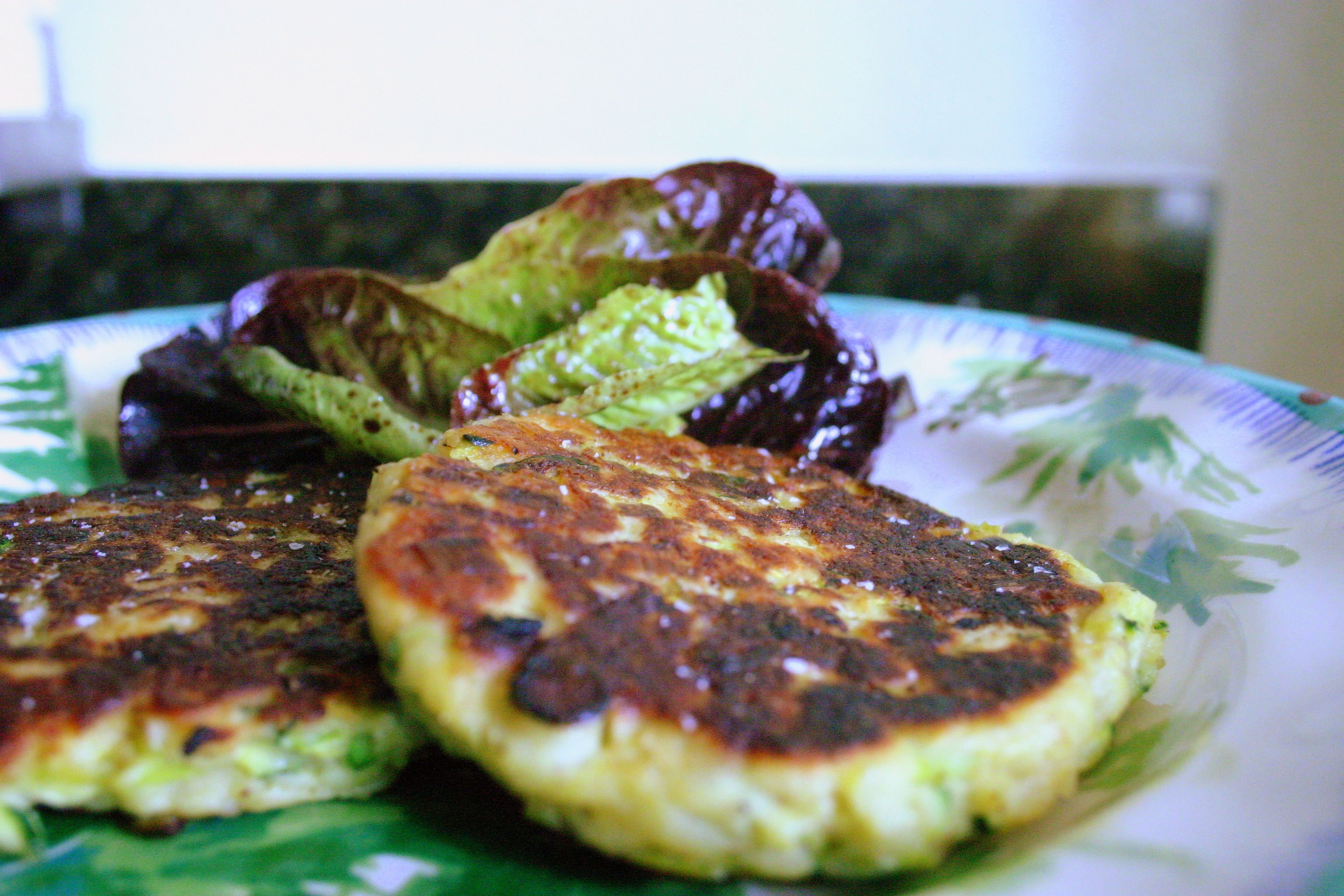
  6. Working in batches, if necessary, fry the cakes, flattening them with a spatula, until they are golden brown on each side, 4 to 5 minutes a side. Set aside and keep warm. Serve with creme fraiche or sour cream.
Slice the leeks into thin slices about 1/8″ thick. To clean, fill a big bowl with water and submerge all the sliced leeks. Lift the leeks out of the bowl with your hands and place in a separate clean bowl. All the dirt and nasty bits should fall to the bottom of the water bowl. Rinse the water bowl; fill with more water; and repeat until leeks are clean.
Lightly salting the grated zuc will force the excess moisture out of it, thus preventing soggy pancakes. Yay!
Blanching the leeks before they go into the pancakes will help bring out their flavor.
Using your hands, mold your mixture into approximately 1/4 cup patties of deliciousness.
Fry the pancakes on a cast iron skillet over medium heat. This will take about 4-5 minutes on each side.
Enjoy with some creme fraiche or sour cream on the side!

Etsy Find: Sophie Blackall

In the age of online dating and computer-based communication, some argue that spontaneous romance is a thing of the past. If you are one of these people, check out Brooklyn-based Sophie Blackall’s blog and Etsy store. Her art visually depicts “Missed Connections” posts on Craigslist in the NYC area.

Some are witty, some are charming, some are totally awkward. But all of her art reflects a level of old fashioned spontaneity and vulnerability. Don’t you wonder if these people found their missed connections? I hope they did!

Here are a few of my favorites:

Tree With Legs
-w4m (Prospect Park)

Nice pants. I’d like to see more of you…
BTW, your dog winked at me.

Tuesday, October 6, 2009
-m4w (L train to Manhattan)
You were reading Catch-22 on the subway this morning. I have never seen such a beautiful profile. I wanted to say hi, but then you’d turn towards me and I wouldn’t be able to look at your profile anymore. You were so into your book, I don’t think you noticed me falling in love with you. But I thought I’d ask, just in case.

Thursday, April 22, 2010
-m4w – 26 (Union Square)
Can I buy you a drink?
-Buffalo plaid jacket

Tuesday, April 6, 2010
-w4m – 28 (Chelsea)
You: tall, brown hair, incredibly voluminous moustache, blue/green checkered shirt
Me: tall, blonde, wearing all black and Burberry rain boots
I boarded the uptown C train at 14th Street at around 10:50 on Tuesday morning. You got off at 23rd. You were staring at me. Hard. You’re really really really ridiculously good-looking.

Monday, November 2nd, 2009
You left your coat here last winter – w4w
… or rather, you let me wear it home.
I found fun dip in one pocket and your NYPL card in the other.
It’s going to keep me deliciously warm this winter as I rack up mountains of overdue fines.

Kitchen Adventures: Vietnamese Coffee Ice Cream

This past Saturday, something monumental happened. Something that hasn’t happened in Seattle for a few solid weeks. The sun came out. And this wasn’t just a tease. It was solid sunshine all day with temperatures soaring into the 60s. (Don’t scoff–that’s considered legitimate shorts weather up here).

We spent a wonderful day at the dog park and just relaxed. All that sun made me really crave a good old fashioned warm weather dessert, so I decided to try David Lebovitz’s recipe for Vietnamese coffee ice cream.

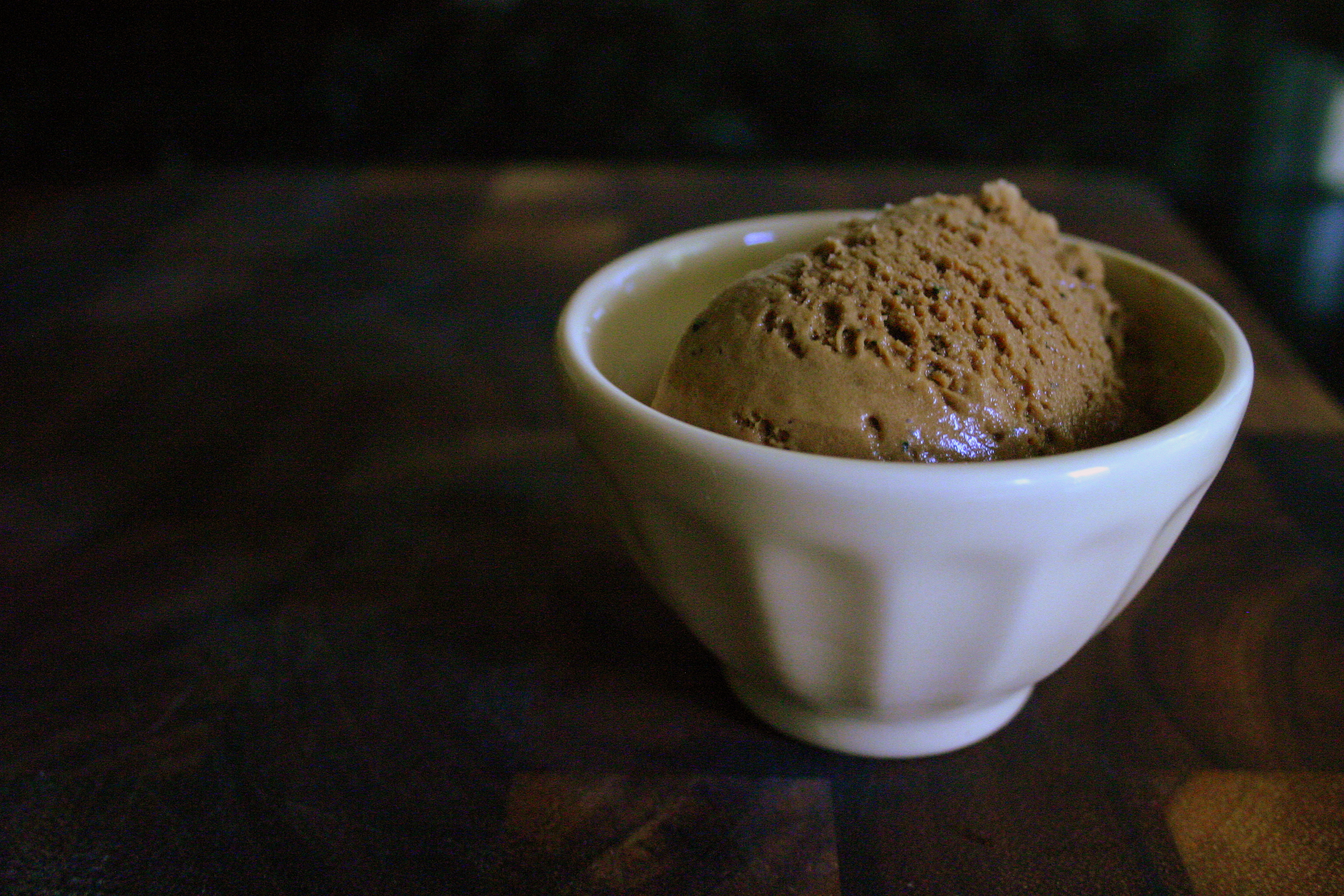
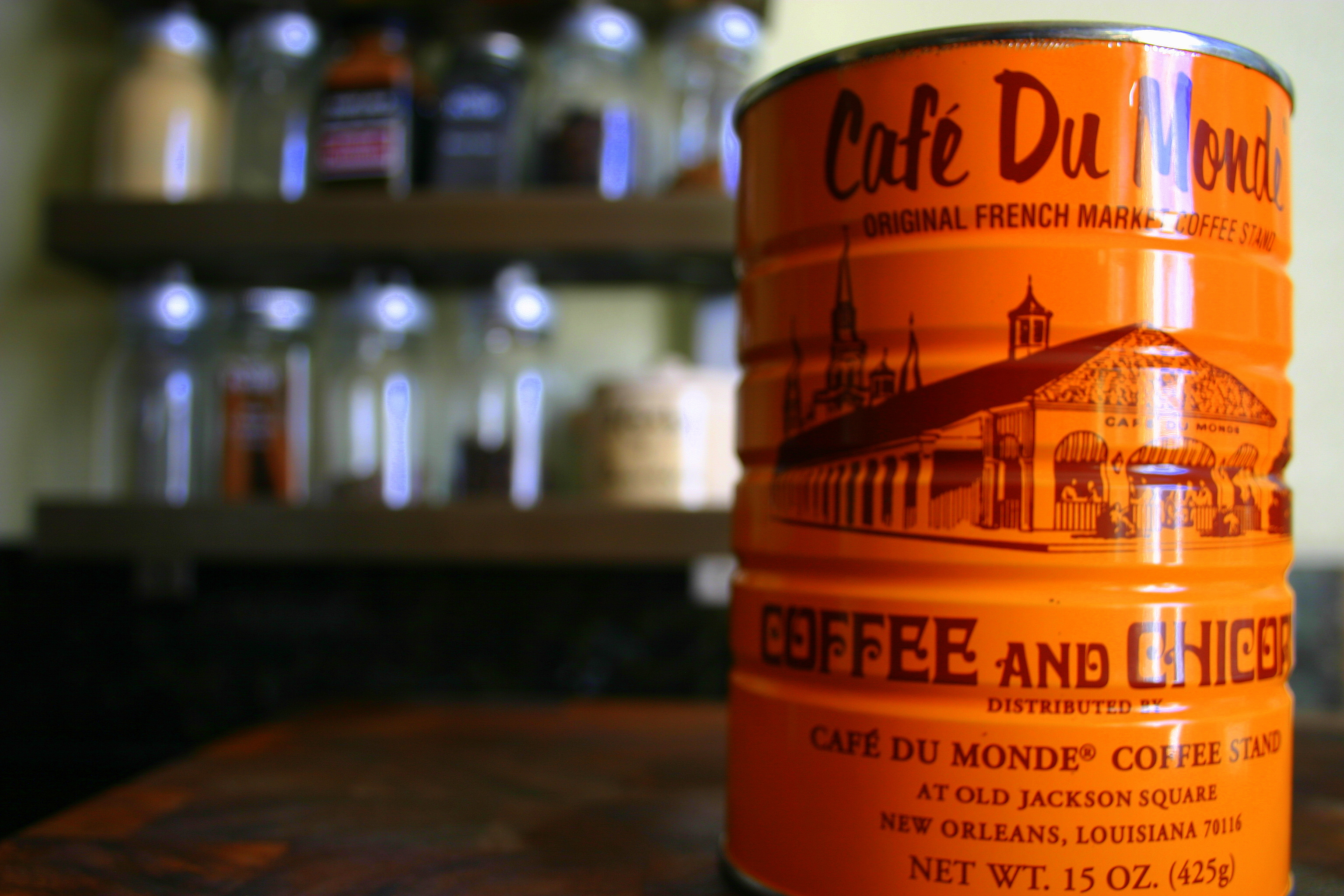
I used Coffee Du Monde, because I love  its delicious chicory  flavor. If you are a Vietnamese iced coffee purist, you can use Trung Nguyen. This was a quick, easy, and delicious ice cream with minimal ingredients. It’s not custard based, so you don’t have to deal with any eggs or cooking. Winning. However, this ice cream does have a softer consistency and melts very quickly. So eat it fast!

Vietnamese Coffee Ice Cream
Adapted from Perfect Scoop by David Lebovitz via Cafe Fernando

Yield: About 1 quart

  • 1 cup sweetened condensed milk
  • 1 1/2 cup water
  • 1/2 cup + 1 teaspoon ground coffee, divided
  • 1/3 cup whole milk or heavy cream
  1. Place 1/2 cup ground coffee into French press. Add 1 1/2 cup boiling water, and steep for about 15 minutes for maximum coffee flavor. After straining you should be left with about 1 cup of coffee. Alternately, you can do this in an electric coffee maker using the same proportions.
  2. Whisk together 1 cup condensed milk, 1 cup coffee, and 1/3 cup milk or heavy cream. Chill the mixture thoroughly (about 12 hours in the fridge or 3-4 hours in the freezer), then freeze in your ice cream machine according to the manufacturer’s instructions. While machine is running, sprinkle in 1 teaspoon ground coffee. (Increase or decrease amount depending on personal preference).
  3. Transfer ice cream into a container with lid and place in freezer to harden. I recommend turning your freezer up to the highest setting.

I love the taste of Cafe Du Monde in my Vietnamese ice coffee, but you can use any darker roast coffee you prefer.

Allowing the coffee to steep in a French press will result in a more robust coffee flavor. Never a bad thing! You can also use a normal electric coffee maker.

The recipe is so simple–just mix all the ingredients together, and refrigerate in a container until thoroughly chilled.

My trusty Kitchen Aid ice cream attachment worked well for this task, but any ice cream maker will do. Sprinkle in about a teaspoon of coffee grounds while them machine is churning for extra coffee flavor.

My very favorite little kitchen helper soaking up the sun and wishing she could have a taste of that ice cream.

Scones Fit for a Queen

Who’s excited about the royal wedding on Friday!? Apparently, not the Americans. Really–only 22 percent of us follow the wedding “somewhat” closely? I think we’re all big fat liars. Come on, don’t you want to know if Sophie Cranston did in fact design Kate’s wedding dress, or if Kate’s sister Pippa manages to get disco balls into the reception at Buckingham Palace? Okay, maybe it’s just me. But there is something undeniably intriguing and romantic about a royal wedding. And if you don’t think so, you may very well have a heart of coal.

In the spirit of all this royal excitement–how cool is this scone recipe from Queen Elizabeth? It comes from the National Archives blog via Matchbook Magazine. Queen Elizabeth served the scones to President Eisenhower during his visit at Balmoral Castle in 1959. According to the National Archives, she later sent Eisenhower the recipe, thus the reason it is now considered a federal record.

{The National Archives Blog}

Re-usable Disposables

Re-usable disposables?

Sounds like an oxymoron, I know. But let me explain.

Lately, I’ve noticed that a lot of stores are offering re-usable versions of products and packaging that we typically recognize as disposable. I love the idea of this! They are available everywhere from Crate & Barrel to my new favorite home store in Seattle, Butter Home. Below are some of my top choices.

Happy Earth Day!

1. Porcelain Raspberry Basket $14.00 {Butter Home}
2. Ceramic Milk Bottle $12.95 {Crate & Barrel}
3. Porcelain Picnic Plate $18.00 {Butter Home}
4. I Am Not a Paper Cup $11.35 {Amazon.com}
5. Washable Paper Bag $28.00 {Anthropologie}
6. Porcelain Strawberry Basket $23.00 {Butter Home}
7. Porcelain Plum Basket $28.00 {Butter Home}
8. Reusable Straws $9.95/pack of 4 {Chef Tools}
9. Farmer’s Egg Crate {Anthropologie}

Kitchen Adventures: Fresh Homemade Ricotta

Homemade ricotta is one of the best kept secrets. It’s affordable, delicious, and oh so easy. Once you try ricotta from scratch you will never be able to go back to store bought. Technically, ricotta (which means “re-cooked” in Italian), is actually made out of whey left over from the production of a rennet-based cheese (such as mozzarella).  But this process is long and laborious, so unless you’ve got a lot of free time on your hands, let’s take the short cut, shall we?

This process takes about 30 minutes to complete, and about an hour of hands-off time to let the ricotta drain. There are a couple of important things you need to know before you get started. First, the dairy. Your ricotta will be as good as the milk and cream that you use. You don’t necessarily need to spend a small fortune at a the farmer’s market if that is not within your budget, but at least try to buy a higher quality brand of dairy. (I bought mine from TJ’s) Most importantly, do not buy any dairy labeled “ultra-pasteurized” or “ultra-high temperature” for ricotta, or any cheese for that matter. Pasteurized milk is what you want. I repeat: DO NOT use ultra-pasteurized, or you will fail miserably and hate me forever.

There are numerous ricotta recipes making the rounds, but my favorite is an old Gourmet magazine that uses the acidity of fresh lemon juice to produce the ricotta. In terms of special equipment, you will need fine-mesh cheesecloth. However, if you have a very fine-mesh colander, you can get away without the cheesecloth at all.

Homemade Fresh Ricotta
Adapted from Gourmet

Yield: About 2 Cups

  • 2 quarts whole milk (8 cups)
  • 1 cup heavy cream
  • 1/2 teaspoon salt
  • 4 tablespoons fresh lemon juice
  1. Line a large colander with one layer of fine-mesh cheesecloth or a few layers of standard cheese cloth. Place colander over a large bowl.
  2. Slowly bring  2 quarts milk,  1 cup cream, and 1/2 tsp salt to rolling boil in a 6-quart heavy pot over moderate heat, stirring occasionally to prevent scorching. Resist temptation to crank the heat up to high.
  3. Once the milk mixture starts boiling, pour in 4 tbs lemon juice. Reduce to a simmer and gently stir until mixture curdles, about 2-4 minutes.
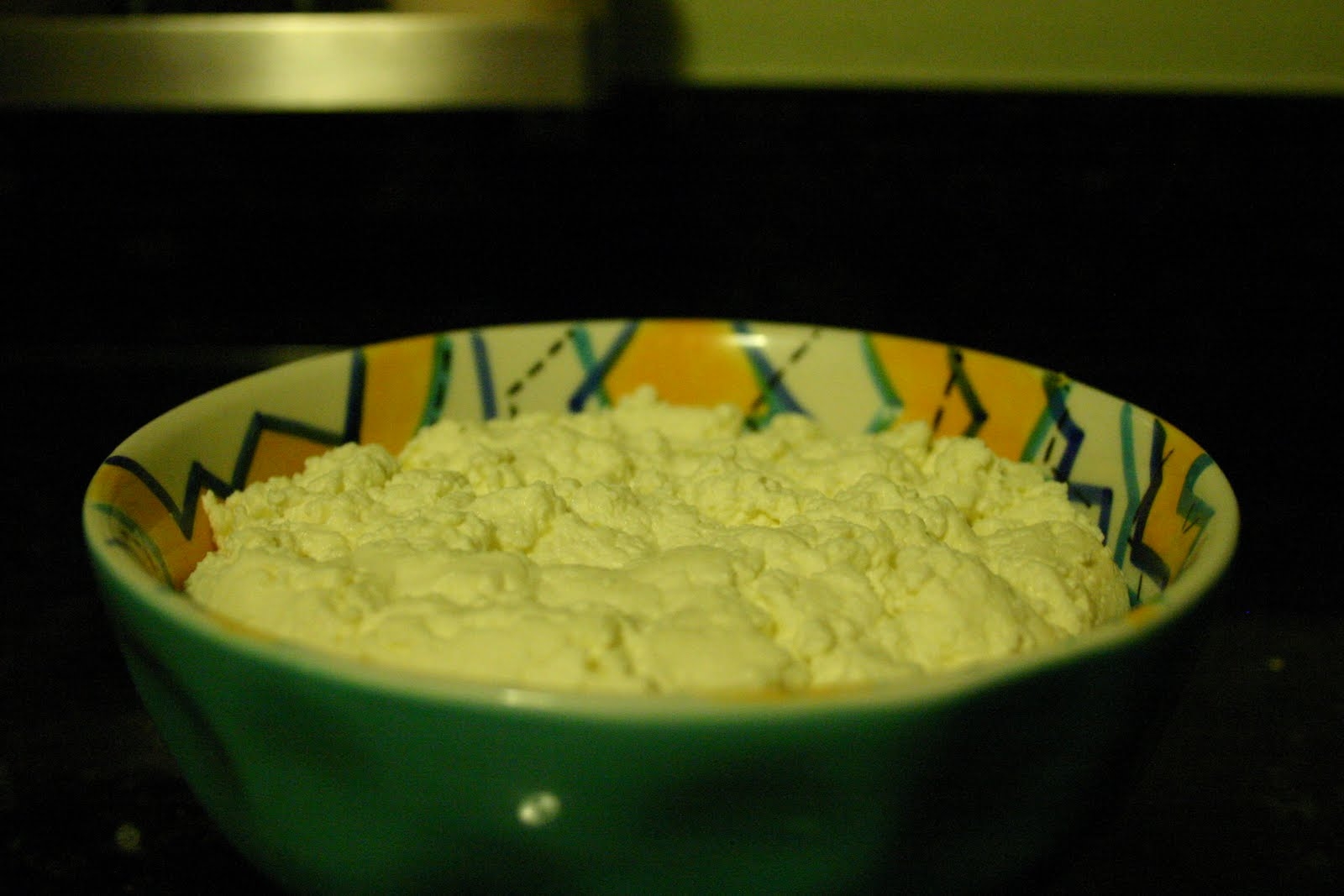
  4. Pour milk mixture into lined colander and let drain for up to an hour. For a creamier consistency, put the ricotta in a food processor with a splash of heavy cream and pulse a couple of times. Keep in air tight container in the fridge for up to two days.

Making ricotta requires minimal ingredients–essentially dairy and an acid. I like the taste of lemon in my ricotta, but you can also use good quality vinegar instead. Alternately, some recipes use buttermilk.

SLOWLY bring milk mixture to a boil, and be sure to keep stirring periodically so it doesn’t burn.

After you pour the fresh lemon juice in, turn the heat down to a simmer and stir very gently. The mixtures should begin to curdle after a minute or so. If your mixture doesn’t start to curdle, don’t freak out…like me! Just calmly pour in more lemon juice one teaspoon at a time until you see a reaction, and be sure the mixture is really simmering.

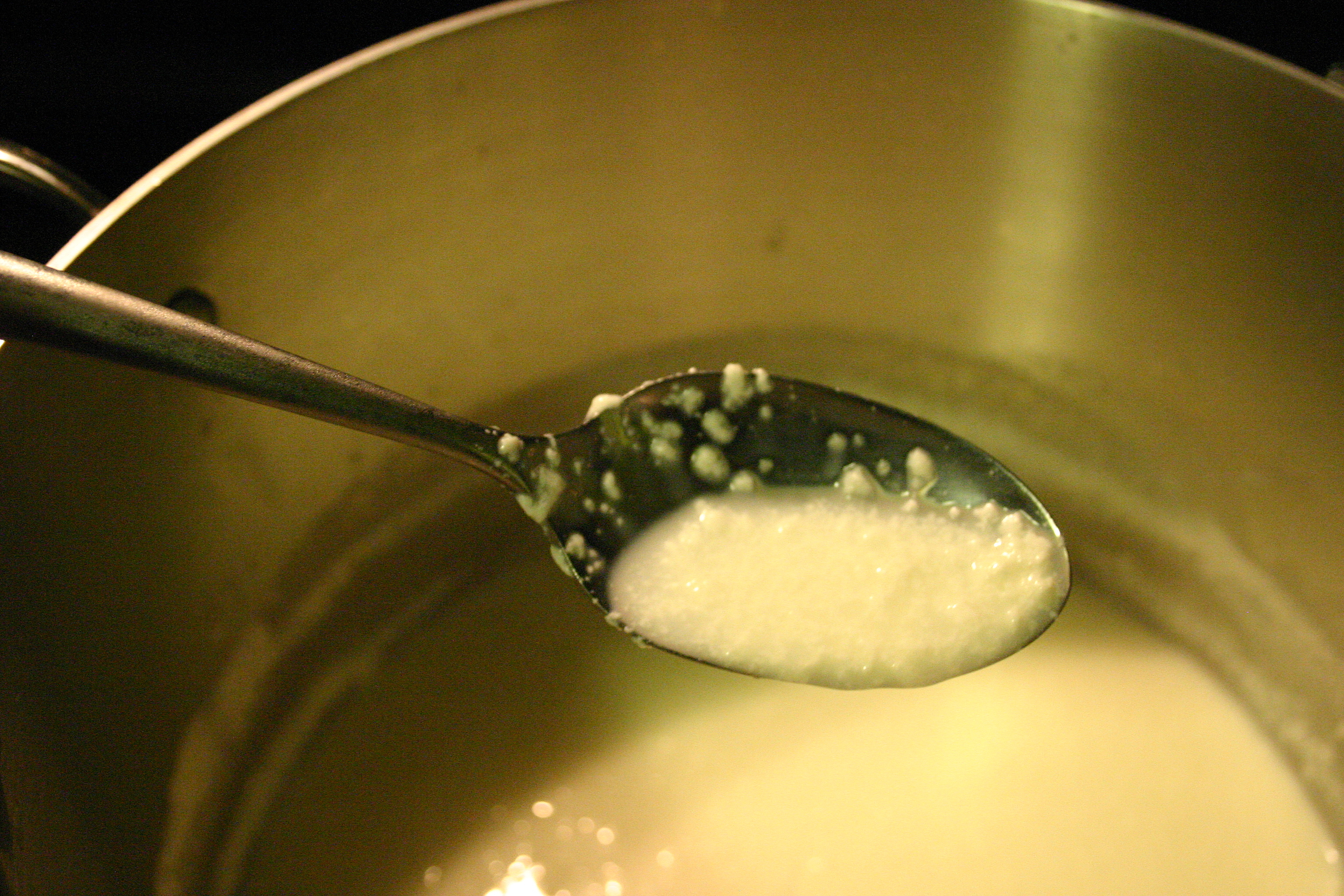
After a couple of minutes, the curds will separate from the whey, like so.

Pour the mixture into the cheesecloth-lined colander and drain. You can place a bowl under the colander to catch the whey. I’ve heard that this can be used in place of buttermilk in recipes. Or as plant food. Or to thicken soups. I have yet to try this.

Now, what to do with all this ricotta? Here are some ideas to get you started:

  • Ricotta Gnocchi (delicious and easy! Post on this coming soon)
  • Lemon Ricotta Cookies
  • Serve warm as an appetizer with bread. Drizzle some olive oil on top and sprinkle with kosher salt. Add some fresh herbs, sun dried tomatoes, or toasted pine nuts if you have some handy.